
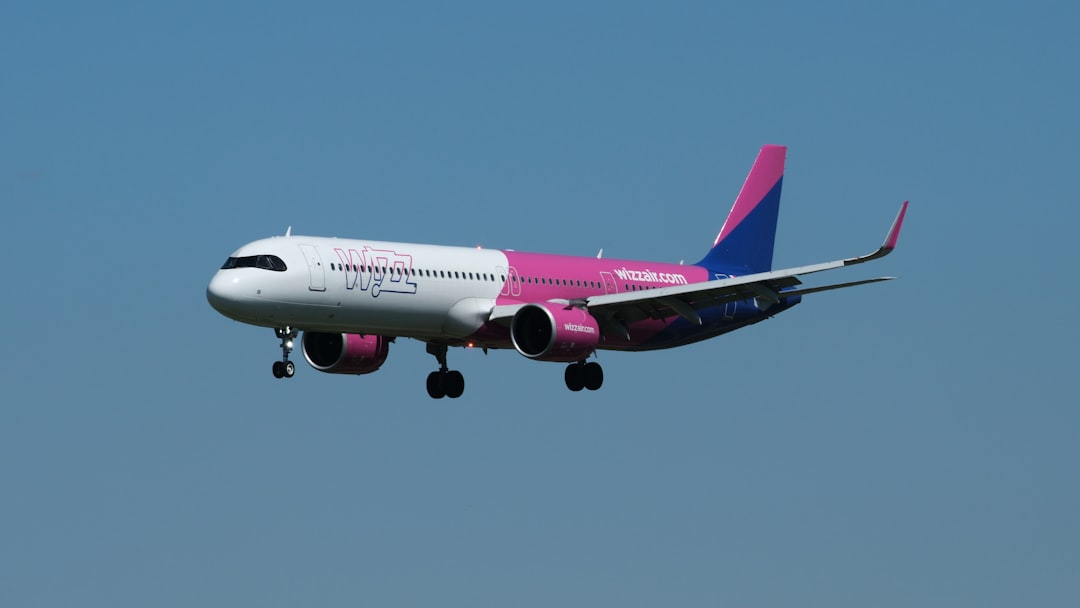
Why Wizz Air is Europe’s Rising Ultra-Low-Cost Aviation Star
Wizz Air is a Hungarian ultra-low-cost airline that has grown from a small startup in 2003 to become one of Europe’s largest budget carriers. Here’s what you need to know:
Quick Facts:
- Founded: 2003 in Hungary
- Fleet Size: 206 aircraft (April 2024)
- Destinations: 194 destinations across 53 countries
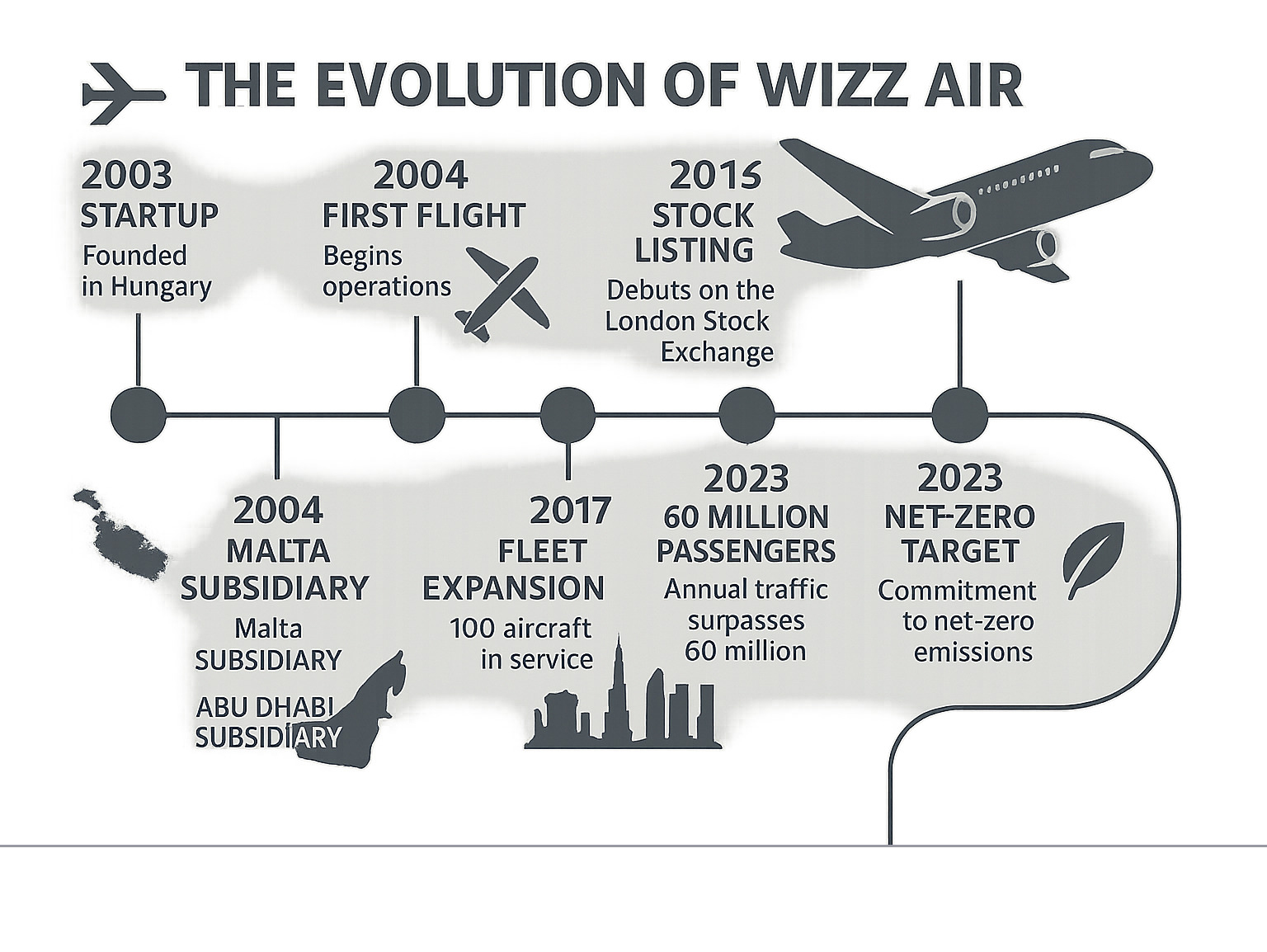
- Passengers: 60.3 million in 2023
- Revenue: €5.07 billion (2024)
- Stock: Listed on London Stock Exchange (WIZZ)
Key Features:
- Ultra-low base fares starting from €9-16
- Modern Airbus A320/A321 fleet only
- Focus on Eastern Europe, Middle East, and secondary airports
- Award-winning safety record (top 5 safest airlines globally)
- Environmental leader with lowest CO₂ emissions per passenger kilometer
This pink-liveried carrier has built its reputation on consistently low fares while maintaining high safety standards. Unlike traditional airlines, Wizz Air strips out extras like meals and seat selection from base tickets, then charges separately for add-ons.
The airline serves both leisure travelers seeking cheap European getaways and business passengers who value efficiency over frills. With bases spanning from London to Abu Dhabi, Wizz Air connects underserved markets that legacy carriers often ignore.
CEO József Váradi has positioned the company as the “greenest choice” in aviation, publicly criticizing competitors’ business-class cabins as environmentally wasteful. The airline aims to cut per-passenger emissions by 30% by 2030.
Related content about wizz air:
What Is Wizz Air? History, Ownership & Business Model
Back in 2003, József Váradi had a bold vision: bring affordable flying to Eastern Europe. That’s when Wizz Air took off from Hungary, becoming the country’s first low-cost carrier. The clever name might sound English, but it actually nods to the Hungarian word “víz” (meaning water) – though they went with the catchier English spelling to welcome international travelers.
What made this startup different? Smart backing from Indigo Partners, a private equity firm that really knows the ultra-low-cost airline game. This wasn’t just money – it was expertise that helped Wizz Air steer Europe’s tough aviation market from day one.
The real milestone came in 2015 when Wizz Air went public on the London Stock Exchange. Trading under the ticker WIZZ, it joined the prestigious FTSE 250 Index and raised serious funds for expansion. Today, the airline operates through a Jersey-registered holding structure, which gives them both tax efficiency and the flexibility to adapt quickly in a changing industry.
Here’s where Wizz Air gets interesting: their ultra-low-cost-carrier model is all about choice. Your base fare gets you from A to B with a small personal bag. Want a checked bag? That’s extra. Prefer a window seat? You’ll pay for it. Hungry during the flight? The buy-on-board menu has you covered. This unbundling lets them advertise those eye-catching €9 fares while still making money from passengers who want extras.
Key People & Shareholding
József Váradi isn’t just the CEO – he’s been Wizz Air’s driving force since takeoff. His previous experience at Malév Hungarian Airlines taught him hard lessons about cost control and staying lean. That wisdom shows in every decision the airline makes today.
Chairing the board is William Franke, whose airline expertise runs deep through his work at Indigo Partners. This investment firm has a track record of launching successful low-cost carriers worldwide, from Frontier Airlines in the US to Volaris in Mexico. That’s serious industry knowledge backing Wizz Air’s growth.
The ownership structure blends institutional muscle with retail investors. Indigo Partners keeps a significant stake, while pension funds and asset managers hold substantial chunks. What’s nice is that employees get skin in the game too through share ownership programs – when the airline succeeds, so do the people who make it happen.
Despite being incorporated in Jersey, Wizz Air follows UK corporate governance standards. Independent directors on the board ensure strategic decisions get proper oversight and shareholders’ interests stay protected.
Business Model Snapshot
Step onto any Wizz Air flight and you’ll see their philosophy in action: single-class cabins packed efficiently but comfortably. No business class here – just economy configured to fit up to 230 passengers in their largest A321neo aircraft. This high-density setup keeps costs per seat rock-bottom.
The magic number for Wizz Air? 87.8% – that’s their impressive 2023 load factor. Nearly 9 out of 10 seats filled on every flight doesn’t happen by accident. It comes from smart dynamic pricing that adjusts fares based on demand and sophisticated systems that squeeze every bit of revenue from each route.
Airport choice makes a huge difference too. While other airlines fight for slots at expensive hub airports, Wizz Air thrives at secondary airports like London Luton. Lower fees, faster turnarounds, and often financial incentives from airports eager to attract budget carriers – it’s a win-win that keeps ticket prices low.
Speed on the ground means more flights per day. Wizz Air targets lightning-fast 25-minute turnarounds for domestic flights and 45 minutes for international routes. When the same aircraft can complete more flights daily, those fixed costs get spread across more passengers.
Their pricing algorithms work around the clock, constantly adjusting fares based on booking patterns, seasonal demand, and what competitors are doing. Book early and you might snag an incredible deal. Wait until the last minute? Expect to pay premium prices. This dynamic approach optimizes revenue while keeping Wizz Air’s reputation for affordable travel intact.
Wizz Air Route Network, Bases & Destinations

Wizz Air’s network spans 194 destinations across 53 countries, making it one of Europe’s most extensive low-cost networks. The airline’s route map stretches from Iceland in the west to Kazakhstan in the east, with particular strength in Eastern Europe and the Mediterranean.
Budapest serves as the primary hub and headquarters, housing the airline’s main operations center. The Hungarian capital provides excellent geographic positioning for serving both Western and Eastern European markets. From Budapest, passengers can reach destinations ranging from London to Dubai within a few hours.
London Luton represents Wizz Air’s largest Western European base, offering connections throughout the continent. The airport’s proximity to central London and lower operating costs make it an ideal launching point for leisure and business travelers.
The Abu Dhabi joint venture, launched as Wizz Air Abu Dhabi, extends the network into the Middle East and South Asia. This partnership with ADQ (Abu Dhabi Developmental Holding Company) allows access to markets like India, Pakistan, and the Maldives that would be difficult to serve from European bases.
Malta provides another strategic base through Wizz Air Malta, established to maintain EU traffic rights post-Brexit. The Mediterranean island offers year-round demand and serves as a gateway to North Africa and the Middle East.
Wizz Air Operating Bases Explained
Budapest remains the crown jewel of Wizz Air’s network, with over 40 aircraft based at Ferenc Liszt International Airport. The facility houses the airline’s training center, maintenance operations, and corporate headquarters at Kőér street 2/A Building B Budapest 1103 HU.
Bucharest Henri Coandă International Airport serves as the second-largest base, capitalizing on Romania’s growing economy and travel demand. The Romanian operation provides connections throughout Europe and serves the large Romanian diaspora working across the continent.
Warsaw Chopin Airport offers access to Poland’s 38 million inhabitants and serves as a gateway to the Baltic states. The base has grown significantly as Poland’s economy has strengthened and travel demand has increased.
Larnaca in Cyprus provides year-round leisure destinations and serves as a stepping stone to Middle Eastern markets. The island’s strategic location allows efficient connections between Europe, Africa, and Asia.
Vienna International Airport represents a premium European gateway, though Wizz Air focuses on leisure routes rather than competing directly with Austrian Airlines on business-heavy destinations.
The network map reveals a spider-web pattern radiating from these bases, with point-to-point routes connecting city pairs without requiring connections through major hubs. This approach reduces complexity and keeps costs low while serving underserved markets.
Expansion Milestones & Recent Closures
Recent expansion has focused on Middle Eastern destinations, with new routes to Saudi Arabia including Riyadh and Jeddah. These markets offer strong demand from both leisure travelers and the large expatriate communities working in the Gulf region.
However, not all expansion attempts succeed. Wizz Air closed its Sarajevo base in 2022 due to insufficient demand and high operating costs. The Bosnian market proved challenging despite initial optimism about connecting the Balkans to Western Europe.
Cardiff operations also ended as the Welsh market couldn’t support year-round services. The airline finded that seasonal leisure demand wasn’t sufficient to maintain a permanent base, leading to route suspensions and eventual withdrawal.
COVID-19 recovery has been uneven across the network. While leisure destinations in Greece, Italy, and Spain bounced back quickly, business-oriented routes took longer to recover. The airline adapted by temporarily shifting capacity toward leisure markets and adjusting schedules based on evolving travel restrictions.
The 2022 Russian invasion of Ukraine significantly impacted operations, with several aircraft stranded in Ukrainian airports and routes to both countries suspended indefinitely. Wizz Air responded by offering 100,000 free tickets to Ukrainian refugees, demonstrating corporate social responsibility during the crisis.
Focus Keyphrase: Popular Wizz Air Destinations in 2024
Wizz air routes in 2024 showcase the airline’s strength in connecting Europe’s most desirable destinations. Beach getaways dominate summer schedules, with Greek islands like Crete, Santorini, and Mykonos proving consistently popular.
City breaks represent another major category, with Prague, Budapest, and Krakow leading bookings from Western European bases. These destinations offer rich history, stunning architecture, and excellent value for money compared to traditional tourist centers.
Mediterranean coastal destinations including Barcelona, Rome, and the French Riviera attract year-round demand. Wizz Air’s competitive pricing makes these premium destinations accessible to budget-conscious travelers who might otherwise choose less expensive alternatives.
Emerging destinations in the Middle East are gaining traction, particularly Dubai and Abu Dhabi. These routes serve both leisure travelers seeking luxury experiences and business passengers connecting to Asian markets.
Seasonal patterns show strong summer demand for beach destinations and winter popularity for city breaks and ski resorts. The airline adjusts capacity accordingly, deploying larger aircraft and higher frequencies during peak periods.
Fleet, Cabin Experience & Sustainability Commitments
When you step aboard a Wizz Air flight, you’re experiencing one of Europe’s youngest and most efficient fleets. The airline operates 206 aircraft as of April 2024, and here’s what makes their approach special – every single plane is an Airbus A320-family jet.
This isn’t just about brand loyalty. By sticking to one aircraft family, Wizz Air keeps things brilliantly simple. Their pilots can fly any plane in the fleet, mechanics know every system inside and out, and spare parts are always compatible. It’s like having a garage full of the same car model – everything just works better.
The fleet consists primarily of A320neo and A321neo variants, which are essentially the Tesla of commercial aviation. These modern jets sip 15% less fuel per passenger than older aircraft, making your journey both cheaper and greener. The “neo” stands for “new engine option,” and those engines are genuinely impressive pieces of engineering.
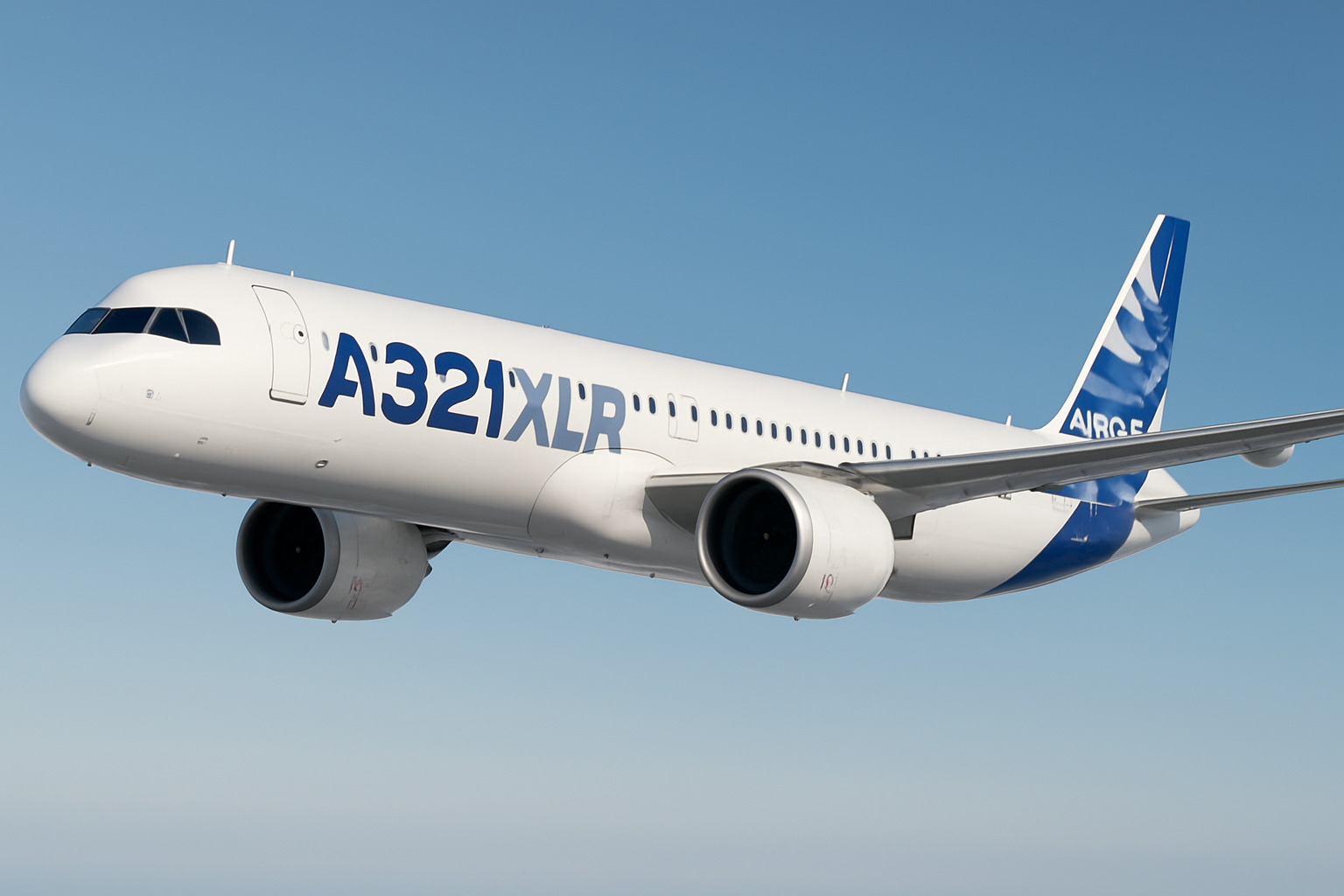
Looking ahead, Wizz Air has ordered the game-changing A321XLR aircraft. These extended-range jets can fly up to 4,700 nautical miles non-stop, potentially opening direct routes from Europe to Central Asia or deeper into Africa. Imagine flying from London to Kazakhstan without a connection – that’s the future this airline is building.
The cabin experience focuses on efficiency over luxury, but don’t mistake that for discomfort. Wizz Air fits 180 seats in their A320neo aircraft and up to 230 in the larger A321neo variants. Yes, it’s cozy, but the slimline seats are designed to maximize your legroom while keeping the plane light and fuel-efficient.
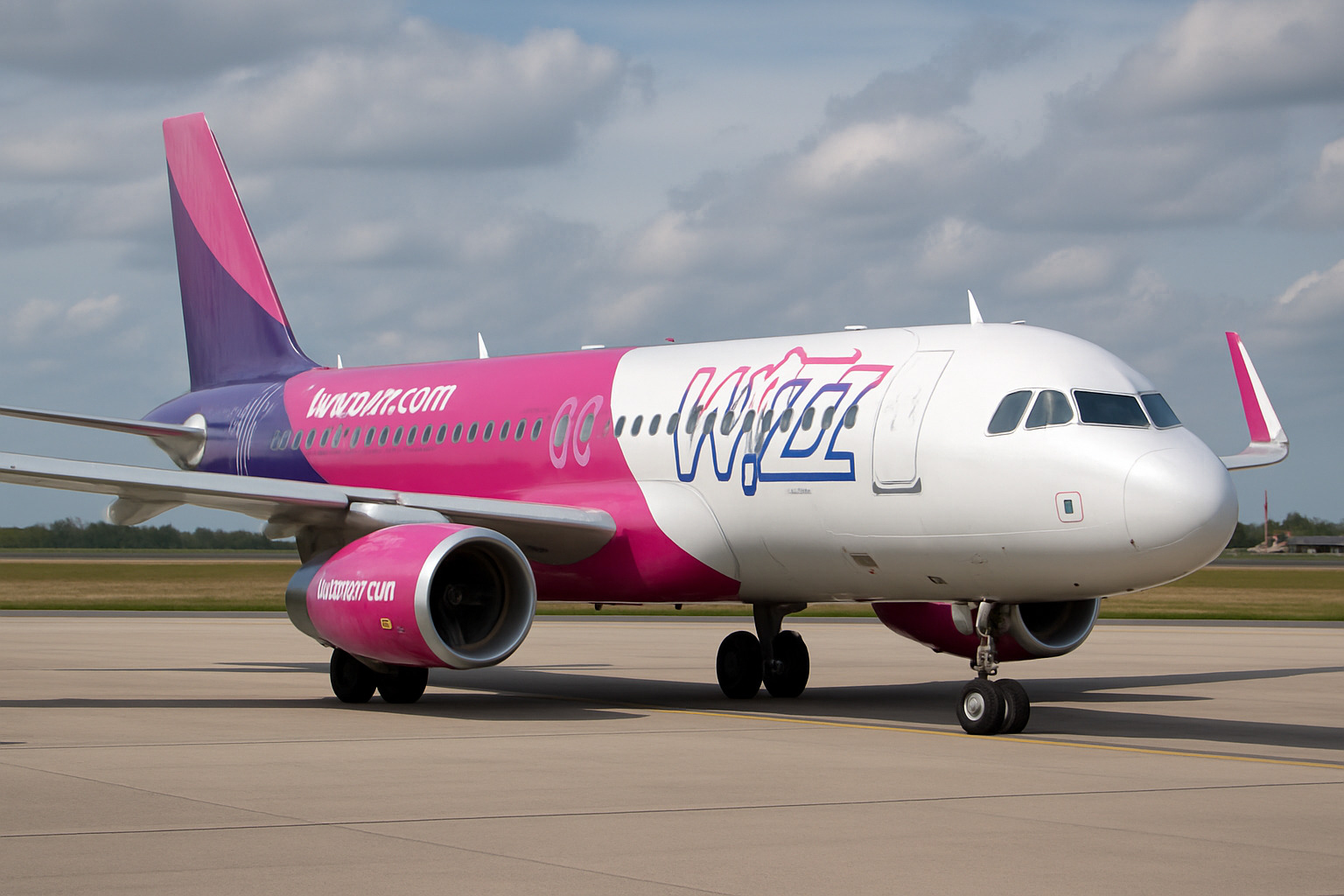
The signature purple and pink color scheme creates a cheerful atmosphere that’s unmistakably Wizz Air. LED lighting systems provide pleasant mood lighting while using less energy than traditional cabin lights. It’s these small details that show how the airline thinks about efficiency in every aspect of their operation.
Environmental Roadmap & Net-Zero Goals
Here’s where Wizz Air truly shines – they’ve achieved something remarkable in aviation. At 53.8 grams of CO₂ per revenue passenger kilometer, they operate the cleanest flights in Europe. To put this in perspective, that’s like driving a hybrid car while carrying 150 passengers.
The airline isn’t resting on these impressive numbers. Their 30% emissions reduction target by 2030 is genuinely ambitious in an industry where every percentage point matters. They’re pursuing this through continued fleet modernization, operational improvements, and innovative fuel technologies.
Sustainable Aviation Fuel (SAF) testing is already underway on select routes. While SAF currently costs more than traditional jet fuel, Wizz Air participates in industry initiatives to scale production and drive costs down. Every flight using SAF brings the industry closer to widespread adoption.
The airline’s commitment goes beyond just buying newer planes. They’re partnering with Airbus on latest research on hydrogen-powered aviation, exploring zero-emission aircraft technologies that could revolutionize flying within the next two decades.
Daily operations include continuous descent approaches that reduce fuel burn during landing, single-engine taxiing to save fuel on the ground, and comprehensive weight reduction programs. These might sound like small changes, but they collectively save thousands of tons of fuel annually.
Even ground operations are going green. Wizz Air works with airports to implement renewable energy and electric ground support equipment. From the moment you check in to when your bag reaches the carousel, they’re thinking about environmental impact.
Awards & Safety Recognition
Safety isn’t where you’d expect a budget airline to excel, but Wizz Air has earned recognition as one of the world’s top-5 safest airlines by airlineratings.com. This achievement puts them alongside airlines that charge three times as much, proving that low-cost doesn’t mean compromising on what matters most.
The airline has won the “Most Sustainable Low-Cost Airline” award from World Finance Sustainability Awards for three consecutive years (2021-2023). This isn’t just a nice certificate for the office wall – it’s industry recognition that their environmental efforts are genuinely making a difference.
Reaching 60.3 million passengers in 2023 represents more than just numbers – it shows that travelers trust Wizz Air with their journeys. Each passenger milestone demonstrates growing confidence in both their safety record and service quality.
The airline’s mobile app has received particular praise for its user-friendly design and comprehensive functionality. In an age where your phone is your boarding pass, wallet, and entertainment system, having a great app isn’t just convenient – it’s essential.
Behind these awards lies serious investment in advanced pilot training simulators, improved maintenance facilities, and rigorous safety management systems. Wizz Air proves that keeping costs low doesn’t require cutting corners on safety – it requires being smarter about everything else.
Booking Wizz Air Flights: Tips, Tools & Loyalty Programs
The Wizz Air booking experience centers around digital-first tools designed to make flight search and purchase as simple as possible. The airline’s website and mobile app offer comprehensive functionality for finding flights, managing bookings, and purchasing additional services.
Fare Finder represents the latest innovation in flight search, helping passengers find the lowest available fares across flexible date ranges. This tool is particularly valuable for leisure travelers who can adjust their travel dates to secure better prices.
MultiPass subscription service, now available in Hungary and Romania, offers unlimited flights for a monthly fee. This innovative approach appeals to frequent travelers who want predictable travel costs and maximum flexibility.
WIZZ Discount Club membership provides access to exclusive fares and priority access to sales. Annual membership costs are quickly recovered through discounted bookings, making it worthwhile for anyone planning multiple trips.
Dynamic bundles allow passengers to combine services like priority boarding, seat selection, and baggage allowances at discounted rates compared to purchasing items separately. These packages simplify the booking process while providing value for travelers who need multiple add-ons.
Seat-selection fees vary by location and flight duration, with premium seats commanding higher prices. However, passengers can often secure free seats by checking in exactly 24 hours before departure when remaining inventory is released.
Money-Saving Hacks & Packing Resources
Flexible dates open up significant savings on Wizz Air flights, with midweek departures often costing substantially less than weekend travel. The airline’s search tools highlight cheaper alternative dates, making it easy to adjust plans for better prices.
Off-peak fares during shoulder seasons provide excellent value for popular destinations. Traveling to Mediterranean beaches in May or September offers pleasant weather at a fraction of peak summer prices.
We recommend checking out our guide on Top Free Travel Apps Every Modern Explorer Needs for tools that complement Wizz Air’s booking platform and improve your travel experience.
Smart packing strategies help avoid excess baggage fees while traveling sustainably. Our Eco Packing Tips guide provides practical advice for minimizing luggage while reducing environmental impact.
Booking directly through Wizz Air’s website or app ensures access to the lowest fares and best customer service. Third-party booking sites often add fees and complicate changes or cancellations.
Early booking generally provides better prices, though last-minute deals occasionally appear for unpopular routes or travel dates. Setting up price alerts helps identify when fares drop for specific destinations.
Onboard & Ancillary Services
Priority boarding allows passengers to board early and secure overhead bin space for carry-on bags. This service is particularly valuable on full flights where bin space becomes limited.
The buy-on-board menu features a selection of hot and cold meals, snacks, and beverages. Prices are reasonable compared to airport restaurants, and the quality has improved significantly in recent years.
Extra-legroom seats provide additional comfort for taller passengers or those wanting more space. These seats are located in exit rows and the front of the cabin, offering up to 32 inches of pitch compared to 28 inches in standard seats.
Baggage rules allow one small personal item in the base fare, with larger carry-on bags and checked luggage available for additional fees. The airline’s strict size and weight limits help maintain on-time performance and keep costs low.
In-flight entertainment relies on passengers’ personal devices, with the Wizz Air app offering downloadable content including the airline’s magazine. This approach reduces aircraft weight and maintenance costs while giving passengers control over their entertainment choices.
Wi-Fi availability varies by aircraft and route, with the service gradually being rolled out across the fleet. Pricing is competitive with other European carriers, though coverage isn’t yet universal.
Frequent-Flyer & Credit Programs
WIZZ Discount Club serves as the airline’s primary loyalty program, offering reduced fares in exchange for annual membership fees. Unlike traditional frequent-flyer programs, this approach provides immediate benefits rather than requiring extensive travel to earn rewards.
WIZZ Credits function as the airline’s currency for rebooking fees, service charges, and voluntary changes. These credits can be earned through various promotions and provide flexibility for passengers who need to modify their travel plans.
MultiPass subscription represents an innovative approach to customer loyalty, offering unlimited flights within specific regions for monthly fees. This program appeals to digital nomads, business travelers, and anyone making frequent short trips.
Airport lounge access isn’t included in base fares but can be purchased separately through partnerships with independent lounge operators. This approach keeps costs low while providing options for passengers who value lounge amenities.
Credit card partnerships in select markets offer co-branded cards with travel benefits and earning opportunities. These programs are still developing compared to legacy carriers but provide additional value for frequent Wizz Air passengers.
Comparing Wizz Air to Other European Low-Cost Choices
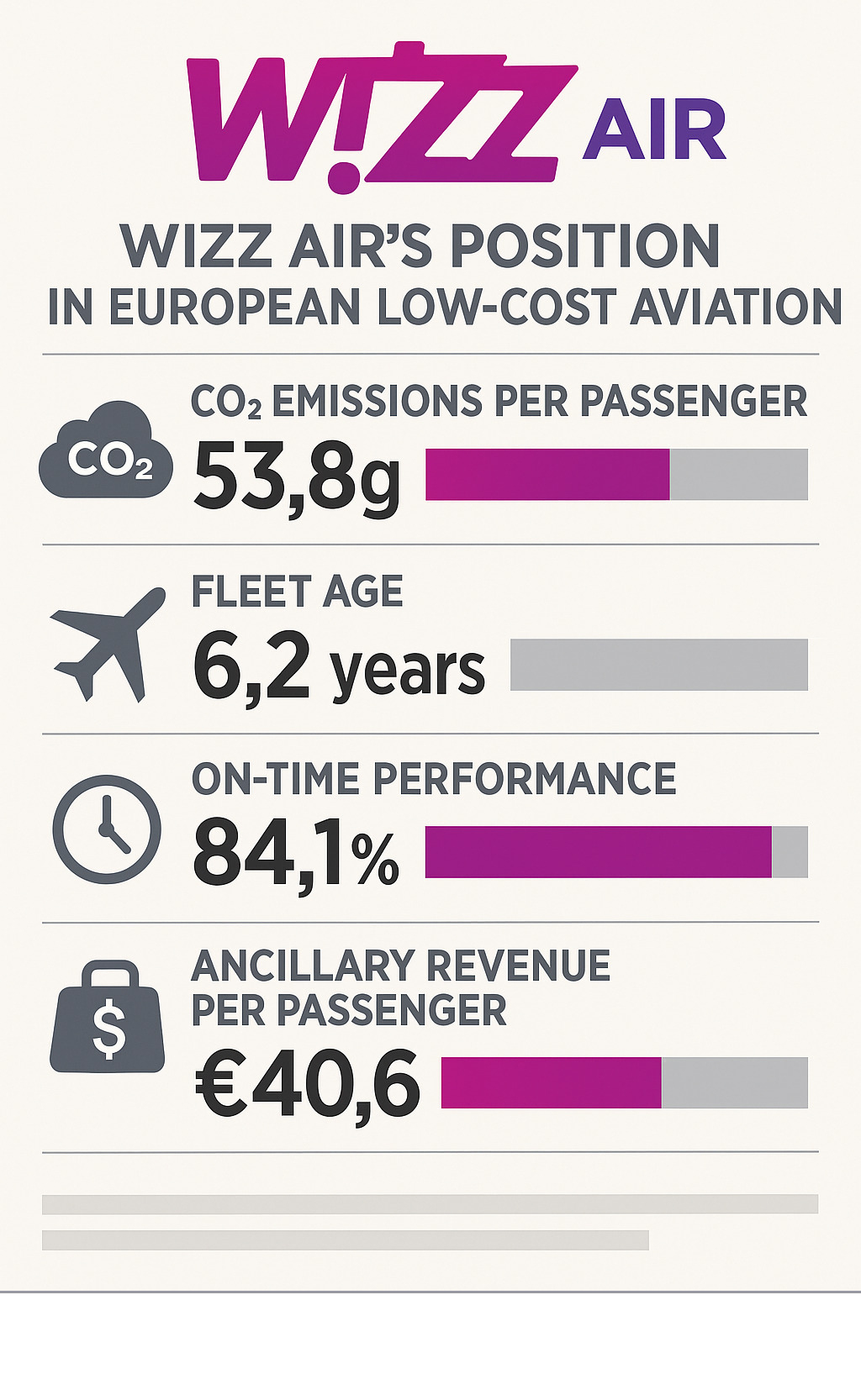
When evaluating European budget airlines, several key metrics help distinguish Wizz Air from its competitors. Seat pitch averages 28 inches in economy, which is standard for low-cost carriers but tighter than legacy airlines’ 31-32 inches. However, the modern fleet age of just 6.2 years significantly beats many competitors operating older, less efficient aircraft.
Environmental performance sets Wizz Air apart with its industry-leading 53.8g CO₂ per revenue passenger kilometer. This efficiency stems from high load factors, modern aircraft, and operational optimization. Many competing carriers emit 20-30% more CO₂ per passenger on comparable routes.
Service fees follow typical ultra-low-cost patterns, with charges for seat selection (€3-25), checked bags (€10-70), and priority boarding (€4-12). These prices align closely with European competitors, though Wizz Air often bundles services at discounted rates.
On-time performance consistently ranks above 80%, meeting industry standards despite operating from secondary airports with potential weather and infrastructure challenges. The airline’s quick turnaround times and efficient operations contribute to reliable schedules.
Fleet commonality provides operational advantages that many competitors lack. While other carriers operate mixed fleets requiring multiple pilot certifications and maintenance programs, Wizz Air’s all-Airbus strategy reduces complexity and costs.
Why Travelers Choose Wizz Air
Ultra-low fares represent the primary attraction, with promotional prices starting from €9-16 for select routes. These headline prices, while requiring careful attention to terms and conditions, genuinely provide access to European travel at unprecedented costs.
The young fleet appeals to environmentally conscious travelers and those who prefer modern aircraft amenities. New planes offer better fuel efficiency, quieter cabins, and more reliable operations compared to older aircraft operated by some competitors.
Wide Eastern European reach gives Wizz Air competitive advantages in markets underserved by Western carriers. Routes to cities like Bucharest, Sofia, and Skopje often face limited competition, allowing the airline to maintain reasonable prices while serving growing demand.
Safety credentials provide peace of mind for budget-conscious travelers concerned about cutting corners. The top-5 global safety ranking demonstrates that ultra-low costs don’t compromise essential safety standards.
Digital-first approach appeals to tech-savvy travelers comfortable with mobile check-in, electronic boarding passes, and app-based customer service. This streamlined approach reduces costs while providing efficient service for most passenger needs.
When Another Carrier Might Fit Better
Airport choice sometimes favors competitors serving primary airports closer to city centers. While Wizz Air’s secondary airport strategy reduces costs, it may add travel time and expense for passengers staying in urban areas.
Schedule frequency on popular routes may be limited compared to larger carriers offering multiple daily flights. Business travelers needing flexible departure times might find better options with airlines providing hourly service.
Connection options are limited since Wizz Air operates primarily point-to-point routes without through-ticketing agreements. Passengers needing to connect to long-haul flights or reach destinations not in the network must arrange separate bookings and handle their own connections.
Included services matter for passengers who value traditional airline amenities like complimentary meals, drinks, and entertainment. While these can be purchased separately on Wizz Air, some travelers prefer all-inclusive fares even at higher total costs.
Premium cabin options don’t exist on Wizz Air, making it unsuitable for travelers requiring business class comfort or services. Corporate travelers with specific comfort requirements may need to consider full-service alternatives.
Frequently Asked Questions about Wizz Air
What is Wizz Air’s baggage policy?
Understanding Wizz Air’s baggage rules can save you money and airport stress. The airline follows a strict but straightforward policy that rewards advance planning.
Your basic ticket includes one small personal item measuring 40x30x20cm – think of a small backpack or purse that slides under the seat in front of you. This covers essentials like your phone, wallet, and travel documents.
Want to bring a proper carry-on bag? You’ll need to purchase cabin baggage allowance for €10-35, depending on your route and when you book. The bag can measure up to 55x40x23cm and weigh 10kg maximum. Here’s a money-saving tip: Priority boarding often costs just €4-12 and includes cabin baggage, making it cheaper than buying baggage alone.
Checked bags start at €10 when booked online in advance. Wait until the airport and you’ll pay significantly more. Wizz Air strictly enforces weight limits, charging €10 per extra kilogram – so pack smart or face surprise fees.
Bringing sports gear or musical instruments? These need special advance booking with additional fees. The airline’s website provides detailed specifications for everything from golf clubs to guitars.
How early can I check in online?
Wizz Air opens online check-in an impressive 30 days before your flight – much earlier than most airlines. This generous window lets you secure your boarding pass and choose seats well ahead of travel day.
The mobile app provides the smoothest check-in experience. Once you download your boarding pass, it works offline, so you won’t worry about spotty airport Wi-Fi. The app sends helpful reminders when check-in opens, though you’ll need to complete the process yourself.
Airport check-in desks open 2-3 hours before departure, but here’s the catch: Wizz Air charges €10-30 for this service. Given how easy online check-in is, those fees feel unnecessary for most travelers.
The airline doesn’t offer automatic check-in, so you’ll need to remember to complete the process yourself. Set a phone reminder when you book your flight – it’s worth the small effort to avoid those airport fees.
Does Wizz Air offer connecting flights?
Wizz Air operates what’s called a point-to-point network, meaning they don’t offer official connecting flights or through-ticketing. Each flight is treated as a separate journey, even if you’re trying to reach a destination that requires multiple flights.
This means you’re on your own for connections. You’ll need to book separate tickets, collect your bags, go through security again, and handle any immigration procedures between flights. If your first flight gets delayed and you miss the second one, Wizz Air won’t help you get to your destination.
Self-connecting is possible at airports where the airline operates multiple routes, but plan carefully. Allow at least 2-3 hours between flights to handle baggage collection, security checks, and walking to your next gate. Some airports offer airside connections that can speed things up, but don’t count on it.
Travel insurance becomes your best friend when self-connecting. Standard airline protections don’t apply since you’re technically on separate bookings. Comprehensive coverage can help with missed connections, extra hotel nights, and rebooking costs.
For complex trips requiring multiple connections, traditional airlines often provide better protection and peace of mind, even if they cost more upfront. Wizz Air works brilliantly for direct flights and simple journeys, but complicated routing might call for different solutions.
Conclusion & Next Steps
Wizz Air has transformed from a small Hungarian startup into one of Europe’s most successful ultra-low-cost carriers, proving that affordable travel doesn’t have to mean compromising on safety or environmental responsibility. The airline’s pink-liveried aircraft have become synonymous with accessible European exploration, connecting underserved destinations across 53 countries.
The key to a great Wizz Air experience lies in embracing the airline’s no-frills philosophy. Travelers who pack smart, check in online, and understand the unbundled pricing model consistently find exceptional value. The modern Airbus fleet, industry-leading safety record, and impressive environmental credentials make it easy to feel good about your travel choices.
What sets Wizz Air apart isn’t just the low fares – it’s the airline’s genuine commitment to sustainable aviation. With the lowest CO₂ emissions per passenger in Europe and ambitious net-zero goals, choosing Wizz Air aligns with responsible tourism values without requiring premium prices.
The airline’s expanding network continues opening new possibilities for adventurous travelers. Recent routes to Saudi Arabia, ongoing growth in the Mediterranean, and the upcoming A321XLR aircraft will open up even more destinations at wallet-friendly prices.
At Soaring in Style, we’re passionate about proving that sustainable travel can be both accessible and inspiring. Wizz Air exemplifies this philosophy by making responsible tourism financially realistic for everyone, not just luxury travelers.
Whether you’re dreaming of weekend city breaks in Prague, beach getaways in Greece, or cultural trips in the Middle East, this Hungarian carrier offers an efficient path to your next trip. The combination of modern aircraft, competitive pricing, and environmental leadership creates opportunities for guilt-free exploration.
Ready to start planning your next sustainable trip? Explore more eco-minded travel guides to find how thoughtful travel choices can improve your experiences while protecting the places we love to visit.
Every journey is an opportunity to explore responsibly. Wizz Air makes it easier than ever to see the world while treading lightly on the planet. Safe travels, and happy exploring!