

Why Cultural Immersion Travel Creates Life-Changing Experiences
Cultural immersion travel transforms ordinary trips into profound journeys of findy. Instead of simply visiting tourist attractions, you live alongside local communities, share their daily routines, and experience their world through their eyes.
What Cultural Immersion Travel Includes:
– Living with locals – Homestays, local guesthouses, and community-run accommodations
– Daily participation – Cooking traditional meals, attending local festivals, learning crafts
– Language exchange – Practicing local phrases while teaching your own language
– Authentic activities – Using public transport, shopping at markets, joining community events
– Cultural reciprocity – Sharing your own culture while learning about theirs
This approach goes far beyond surface-level sightseeing. Research shows that 73% of global travelers want authentic experiences that represent local culture, according to a 2023 Booking.com survey.
Cultural immersion creates meaningful connections that benefit both you and the communities you visit. You gain empathy, language skills, and unforgettable memories. Local communities receive direct economic support and opportunities to share their heritage with respectful visitors.
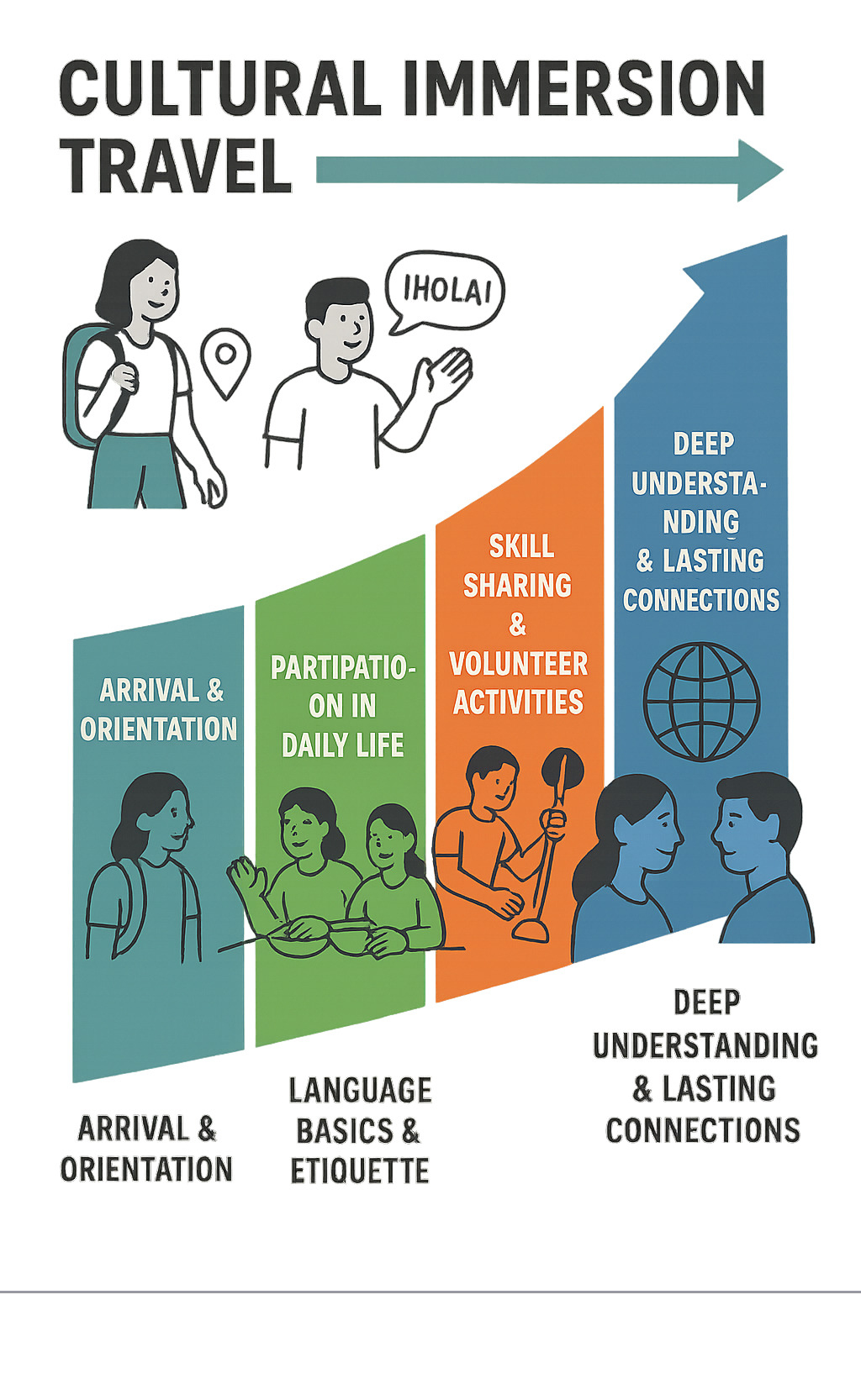
Simple guide to cultural immersion travel:
– cross cultural experience
– cultural education programs for adults
– cultural experiences
What Is Cultural Immersion Travel?
Cultural immersion travel is like stepping through a doorway into someone else’s world. Instead of watching life unfold from the sidelines, you become part of the daily story of a community. You’re not just visiting a place – you’re temporarily becoming a neighbor, a student, and sometimes even a teacher.
Think of it this way: traditional tourists take photos of street food vendors, while cultural immersion travelers learn to make the food alongside them. The difference is profound, and it transforms both the traveler and the communities they visit.
Definition & Core Principles of Cultural Immersion Travel
Real cultural immersion travel stands on three pillars that make all the difference between a meaningful journey and just another vacation.
Authenticity means seeking the real deal, not the tourist version. When you join a family for their evening meal instead of dining at a restaurant that caters to visitors, you’re experiencing authenticity. When you help with daily chores or learn traditional skills from people who’ve practiced them for decades, you’re getting the genuine experience that most travelers never find.
Reciprocity turns you from a passive observer into an active participant. The best cultural exchanges happen when you bring something to the table too. Maybe you teach local kids a few words in your language while they teach you theirs. This give-and-take creates bonds that last long after you return home.
Respect guides every interaction and keeps you grounded in humility. You’re a guest in someone else’s home, community, and way of life. This means doing your homework before you arrive, following local customs even when they feel unfamiliar, and approaching differences with genuine curiosity rather than judgment.
Cultural Immersion Travel vs. Traditional Tourism
The gap between cultural immersion travel and regular tourism becomes crystal clear when you look at where people sleep, eat, and spend their time.
Traditional tourists often find themselves in a comfortable bubble. They stay in international hotel chains where staff speak their language, eat at restaurants designed for foreign palates, and move around in air-conditioned buses with other tourists.
Cultural immersion travelers take a different path. They choose homestays where they share meals with local families, learning about daily routines and family traditions. They steer public transportation, striking up conversations with commuters and getting lost in neighborhoods where tourists rarely venture.
The economic impact tells an important story too. When you stay with a local family instead of a chain hotel, your money goes directly into their pocket. The World Tourism Organization reports that cultural tourism now represents 39% of all global travel, with immersive experiences growing faster than any other segment.
This approach to travel creates what researchers call “transformative experiences” – moments that actually change how you see the world and your place in it.
Benefits for Travelers and Host Communities
The magic of cultural immersion travel creates ripple effects that transform both visitors and the communities they encounter. When you share a meal with a family in rural Vietnam or learn traditional weaving from an artisan in Guatemala, something profound happens – connections form that benefit everyone involved.
Science backs up what travelers have long felt intuitively. Research shows that awe-inducing experiences like cultural immersion boost dopamine and serotonin levels, creating those peak memories that stay vivid for decades. A 2022 study by the Center for Responsible Travel found that 82% of travelers believe cultural immersion leads to more meaningful and memorable experiences than traditional sightseeing.
For deeper insights into how cultural experiences shape our worldview, explore our guide on Immersing in Culture.
Traveler Gains: Skills & Memories
Cultural immersion travel turns you into a more capable, empathetic person. You’ll return home with what researchers call “soft skills” – abilities that prove invaluable in our connected world, including better communication, adaptability, and cultural sensitivity.
Language learning accelerates dramatically when you’re ordering breakfast in broken Spanish or asking for directions in Mandarin. While apps and classes provide structure, daily conversations with native speakers develop fluency that textbooks simply can’t match.
Your cross-cultural competence grows as you steer unfamiliar social situations. You develop the ability to read nonverbal cues, adapt your communication style, and find common ground across cultural differences.
Empathy and global perspective expand naturally when you see the world through different cultural lenses. Living with families in various economic circumstances, witnessing different approaches to community and spirituality, broadens your understanding of human experience.
The storytelling abilities you develop from navigating cultural differences and memorable experiences become part of who you are, enriching conversations and relationships for years to come.
Local Gains: Economy & Heritage
Host communities gain tremendous value from thoughtful cultural immersion travel. Unlike mass tourism that often channels money to international hotel chains, immersive travel puts economic benefits directly into local hands.
Job creation extends beyond traditional tourism roles. Homestay families earn income while sharing their daily lives. Local guides, cooking instructors, craft teachers, and language exchange partners find new economic opportunities that value their cultural knowledge.
Cultural preservation receives vital support when visitors pay to learn traditional crafts, attend local festivals, or hear storytelling traditions. This creates economic incentives for communities to maintain and pass on their heritage.
Community pride strengthens when visitors show genuine interest in local culture. Research indicates that respectful cultural exchange helps communities appreciate their own traditions and resist homogenizing global influences.
How to Plan & Prepare for a Cultural Immersion Trip
Planning for cultural immersion travel feels different from organizing a typical vacation. Instead of just booking the basics, you’re preparing to step into someone else’s world – and that requires a thoughtful approach that goes well beyond flights and hotels.
Your preparation journey starts with understanding the cultural landscape you’re about to enter. Spend time researching local customs, social etiquette, and current events in your destination. Learn how locals greet each other, what topics spark joy versus those that might cause discomfort, and how to dress appropriately for different situations.
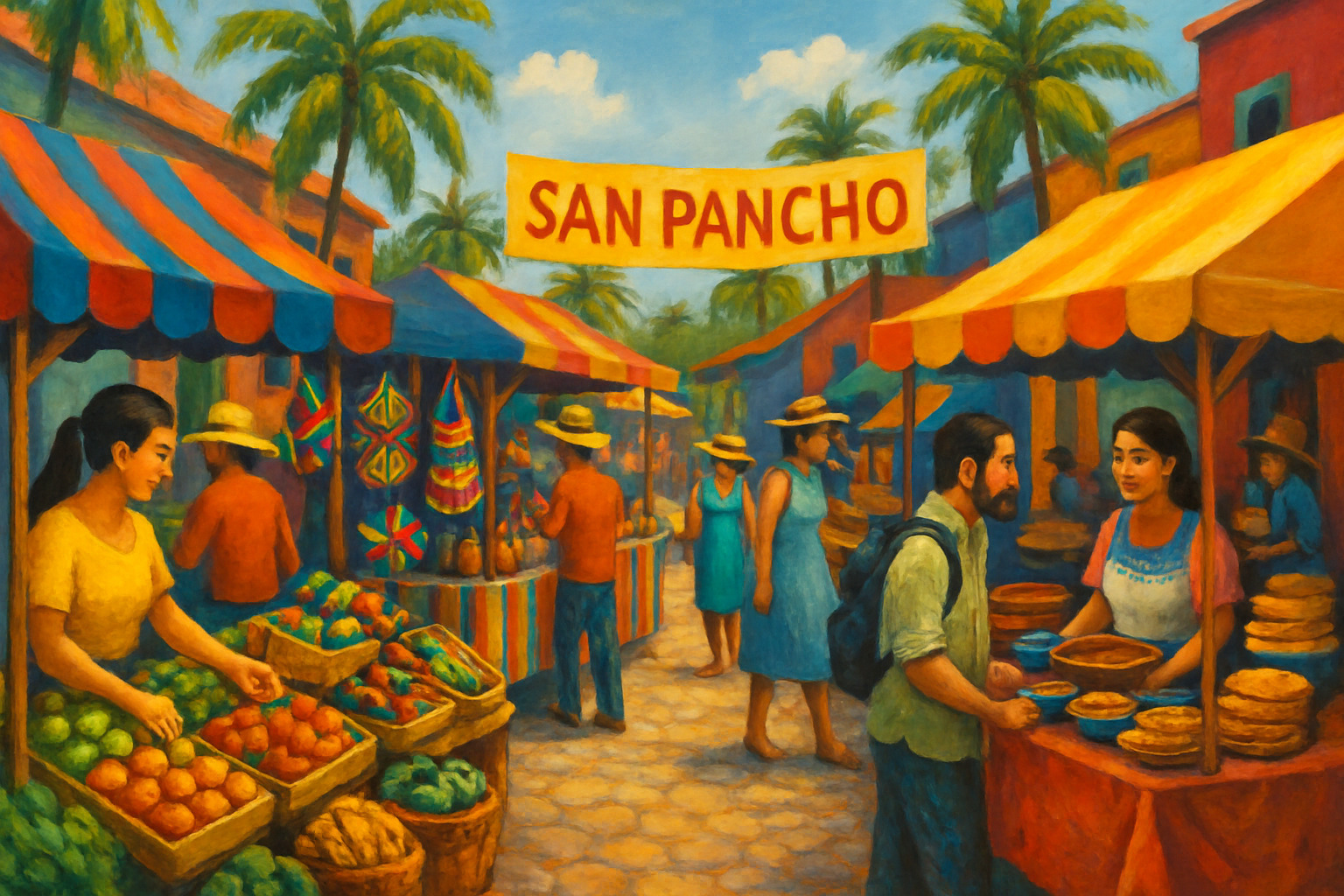
Budgeting for immersion experiences looks quite different from traditional travel planning. While you might save money on accommodations by choosing homestays over luxury hotels, you’ll want to set aside funds for the experiences that make immersion meaningful. Think cooking classes with local families, artisan workshops, language lessons, and small gifts to show appreciation to your hosts.
Packing smart means thinking beyond your own comfort to consider cultural sensitivity and versatility. Bring clothing that works for various activities – you might find yourself helping with farm work one day and attending a religious ceremony the next. Don’t forget to bring pieces of your own culture to share.
For comprehensive guidance on finding authentic cultural experiences around the globe, explore our detailed resource on Immersive Journeys: Finding Cultures Around the World.
Language Learning: Your Immersion Superpower
Learning even basic phrases in the local language transforms your cultural immersion travel experience from good to extraordinary. Language serves as the bridge between being an observer and becoming a participant in daily life.
You don’t need fluency to make meaningful connections. Sometimes a sincere attempt to say “good morning” in someone’s native language opens doors that perfect English never could.
Before you leave home, download apps like Duolingo or Babbel to build your foundation. Focus on practical phrases that show genuine interest in learning from locals. Master “How do you make this?” or “Can you teach me that?” and watch how people light up when you ask.
Practice conversations through platforms like iTalki connect you with native speakers who can teach you not just words, but the cultural context behind them.
Once you arrive, daily practice becomes your secret weapon. Challenge yourself to have one meaningful conversation per day in the local language, even if it’s just asking about someone’s family or complimenting their cooking.
Language exchange creates beautiful reciprocal relationships. Offer to teach English phrases while learning theirs. This mutual teaching approach transforms language barriers into bridges of understanding.
Homestays & Local Lodging Essentials
Where you sleep shapes everything about your cultural immersion travel experience. While international hotel chains offer predictable comfort, they also create a bubble that separates you from authentic local life.
Homestays provide the deepest cultural dive possible. Living with local families means witnessing morning routines, sharing meals prepared with family recipes, and understanding community relationships that tourists never see.
Community-run guesthouses offer a wonderful middle ground between immersion and privacy. These locally-owned accommodations employ community members and often organize cultural activities.
Family-run bed and breakfasts create opportunities for cultural exchange through personal interactions. Your hosts often become informal cultural guides, sharing insider knowledge about authentic experiences.
When choosing accommodations, look for hosts who actively engage with guests rather than simply providing a room. For ethical homestay options that ensure fair compensation for host families, consider programs through grassroots organizations.
Ethical Volunteering & Community Projects
Volunteering can deepen your cultural immersion travel when approached thoughtfully and ethically. The goal is ensuring your contributions genuinely benefit communities while providing meaningful cultural exchange for you.
Skill-sharing projects work best when they leverage your existing expertise to support community goals. Teachers might assist with English conversation practice, healthcare workers could provide training, or business professionals might help market local crafts.
Mutual benefit programs ensure everyone gains from the exchange. Platforms like Workaway and WWOOF connect travelers with hosts who need specific assistance. You might help with organic farming, eco-construction, or community development projects while learning about sustainable living and local traditions.
Avoiding problematic volunteer tourism requires careful research. Ethical programs maintain long-term community relationships, employ local staff, and focus on building local capacity rather than creating dependency.
For guidance on selecting ethical volunteer opportunities that benefit both you and host communities, consult resources on ethical volunteer placements.
Top Cultural Immersion Travel Activities & Examples
The magic of cultural immersion travel happens when you step away from guidebook attractions and dive into the rhythms of everyday life. These aren’t the experiences you’ll find on postcards, but they’re the moments that will stay with you long after you return home.
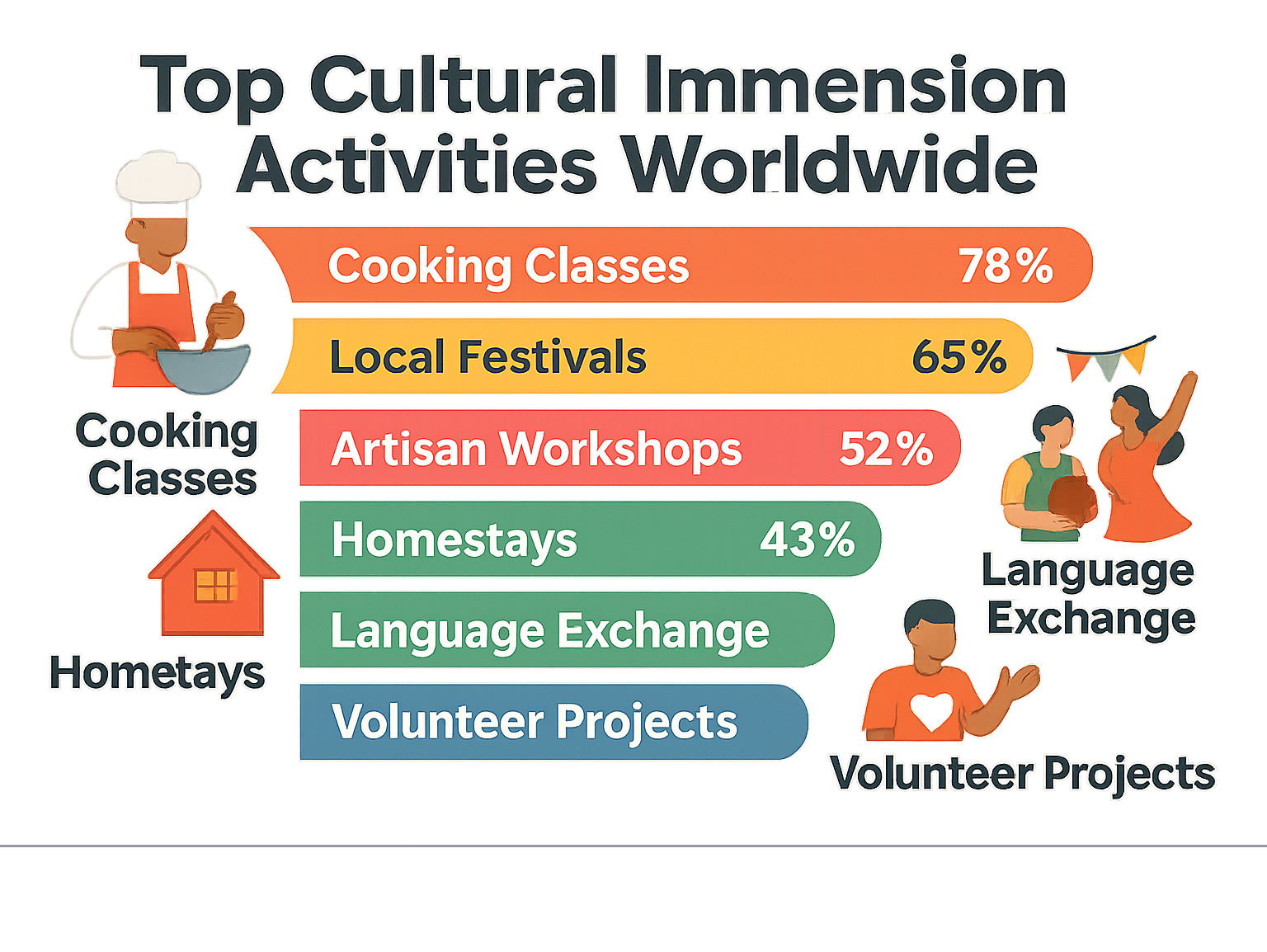
The Trip Travel Trade Association found that 78% of travelers consider cooking classes and homestays essential to their cultural experience. This shift toward authentic engagement shows that people crave real connections over staged performances.
Everyday Rituals That Open up Culture
Morning routines offer the most honest glimpse into how people actually live. There’s something beautifully intimate about joining a Moroccan family for their dawn tea ritual or helping prepare a full Turkish breakfast spread. These quiet moments before the day officially begins reveal cultural values in ways that formal presentations never could.
Market visits transform from tourist activities into social education when you tag along on actual shopping trips. Local markets pulse with community life. Vendors know their customers by name, neighbors catch up on gossip, and seasonal rhythms dictate what’s available.
Communal meals break down barriers faster than any language lesson. Whether you’re navigating Korean family-style dining etiquette, participating in an Ethiopian coffee ceremony, or helping three generations of an Italian family prepare Sunday dinner, food becomes your cultural translator.
Neighborhood walks with local friends reveal the stories behind everyday places. That corner café isn’t just a coffee shop – it’s where the neighborhood gathers every morning to discuss politics. These informal explorations often lead to the best surprises: spontaneous invitations for tea, impromptu cultural lessons, or introductions to people who become lifelong friends.
Signature Experiences Around the World
Mongolian nomadic life offers one of the world’s most dramatic cultural immersions. Living in traditional gers with nomadic families, you’ll participate in daily livestock care, learn throat singing techniques, and experience a lifestyle that has remained essentially unchanged for centuries.
Thai cooking immersion goes far beyond following recipes. Learning to prepare traditional dishes in family kitchens reveals the cultural significance of ingredients, the philosophy behind cooking methods, and the social customs surrounding meal presentation.

Navajo storytelling traditions connect you with indigenous wisdom and oral history in profound ways. Participating in traditional storytelling sessions, learning about sacred locations like Spider Rock in Canyon de Chelly, and understanding creation myths provides insights into indigenous worldviews and the deep connection between landscape and culture.
For more detailed information about authentic cultural travel experiences worldwide, explore our comprehensive guide to Authentic Cultural Travel Experiences.
Frequently Asked Questions about Cultural Immersion Travel
What are the main benefits of cultural immersion travel?
Cultural immersion travel transforms you in ways that regular vacations simply can’t match. When you live alongside local families and participate in their daily routines, you develop a deeper understanding of the world that stays with you long after you return home.
The personal growth benefits are remarkable. You’ll find your empathy expanding as you see life through completely different cultural lenses. Your language skills improve rapidly when you’re practicing with native speakers every day. Many travelers find they’ve developed cross-cultural communication abilities that prove invaluable in both personal and professional settings.
Science backs up what travelers have long known – these experiences create lasting change. Research shows that awe-inducing cultural experiences boost dopamine and serotonin levels, creating peak memories that remain vivid for years.
Meanwhile, host communities gain significantly from thoughtful cultural exchange. Your homestay fees, local guide payments, and craft purchases provide direct economic support to families. When you show genuine interest in traditional practices, you help communities preserve their heritage.
How can I find authentic immersion opportunities without going remote?
You don’t need to trek to remote villages to experience authentic cultural immersion travel. Some of the most meaningful cultural exchanges happen right in cities and popular destinations – it’s all about how you approach your travels.
Urban neighborhoods offer incredible immersion opportunities when you know where to look. Skip the tourist districts and head to residential areas where real life unfolds. Use public transportation and strike up conversations with your fellow commuters.
Stay with local families through homestay programs, even in major cities. These experiences give you insider access to daily routines, family dynamics, and community connections that no hotel can provide.
Participate in community life by attending local festivals, religious services, or neighborhood events. Join language conversation groups at community centers. Look for volunteer opportunities that connect you with residents working on local projects.
The secret is choosing local over international at every opportunity. Eat at family-run restaurants instead of chains. Take cooking classes in private homes rather than commercial kitchens.
Is cultural immersion travel suitable for families and older travelers?
Cultural immersion travel works beautifully for travelers of all ages, often creating even more meaningful experiences for families and older adults than for solo young travelers.
Families find unique educational opportunities that no classroom can replicate. Children adapt quickly to new languages and customs, often becoming natural bridges between cultures. Their curiosity and playfulness transcend language barriers, creating instant connections with local families.
Older travelers bring valuable life experience that improves cultural exchange. Many cultures particularly respect elders, opening doors to meaningful conversations about history, traditions, and life perspectives.
The key for older travelers is choosing experiences that match their comfort levels and physical capabilities. This might mean focusing on cultural exchange through conversation and observation rather than physical activities.
Both families and older travelers should communicate their needs clearly when arranging immersive experiences. Many cultural exchange organizations specialize in programs that welcome these demographics.
Conclusion & Next Steps
Cultural immersion travel isn’t just another way to see the world – it’s a complete shift in how we experience it. When you choose to live alongside local families, learn traditional skills, and participate in daily community life, you’re not just visiting a place. You’re becoming part of its story, even if only briefly.
The numbers tell a compelling story. With 73% of travelers now seeking authentic cultural experiences and 82% reporting that immersion creates more meaningful journeys, we’re witnessing a fundamental change in how people want to travel.
The path forward starts with a single decision – choosing connection over convenience. When you prioritize staying with a local family over a luxury hotel, learning a few phrases in the local language over relying on English, or shopping at neighborhood markets over tourist districts, you’re already beginning your immersion journey.
Language preparation becomes your superpower, opening doors that remain closed to other travelers. Even stumbling through basic conversations shows respect and genuine interest that locals appreciate.
Research and respect lay the foundation for meaningful exchanges. Understanding local customs, etiquette, and current social dynamics demonstrates that you value your hosts’ culture enough to learn about it before arriving.
Choosing the right accommodations and activities shapes your entire experience. Homestays, community-run guesthouses, and local workshops provide the intimate settings where real cultural exchange happens.
The beauty of cultural immersion lies in its universality. Whether you’re sharing tea with Berber families in Morocco, learning traditional weaving in Guatemala, or participating in harvest festivals in rural Japan, the human connections you form speak a language that needs no translation.
Challenges become opportunities when approached with curiosity and flexibility. That moment when you can’t communicate what you need, when local customs confuse you, or when homesickness hits – these aren’t travel failures. They’re the growing pains that stretch your worldview and build resilience you’ll carry forever.
At Soaring in Style, we believe travel should leave both you and your destinations better than before. Cultural immersion travel embodies this philosophy perfectly. Your respectful participation supports local economies, preserves cultural traditions, and creates the kind of mutual understanding our world desperately needs.
Your immersion journey begins with your next trip decision. Instead of booking that familiar resort or organized tour, consider the homestay option. Research language exchange programs in your chosen destination. Look for cooking classes taught in family kitchens rather than commercial spaces.
Ready to dive deeper into planning your cultural immersion trip? Our comprehensive guide Immersive Journeys: Finding Cultures Around the World offers destination-specific insights and practical planning strategies to help you create authentic connections wherever you choose to wander.
The world is full of families ready to welcome you, artisans eager to share their skills, and communities that will accept your genuine interest in their way of life. All you need to do is take that first step beyond your comfort zone and into the rich, complex, beautiful world of human connection that awaits.