

The Future of Travel: Reducing Your Carbon Footprint
Looking for carbon-neutral travel companies to book your next eco-friendly trip? Here are the top providers committed to zero-emission travel experiences:
- Intrepid Travel – Carbon neutral since 2010, operates 2,000+ trips in 120+ countries
- Natural Habitat Trips – Offset 68,093 tons of CO2 since 2007
- Pura Aventura – Offsets 160% of carbon emissions, making it climate-positive
- Rabbie’s Tours – Implements a self-imposed £10/ton carbon tax
- INTRO Travel – Plants 10 trees per booking, with tens of thousands planted since 2019
- Gondwana Ecotours – Offsets all guest flights and entire tour operations
- Cheesemans’ Ecology Safaris – Partners with Sustainable Travel International for complete trip neutrality
In an era of climate consciousness, carbon-neutral travel companies are revolutionizing how we explore the world. As luxury travelers seeking authentic experiences, we no longer need to choose between unforgettable journeys and environmental responsibility. The travel industry contributes approximately 8% of global greenhouse gas emissions, making sustainable tourism practices not just trendy but essential.
When a long-haul flight generates more carbon emissions than an average person in many countries produces in an entire year, the need for carbon-neutral travel options becomes clear. The good news? Innovative tour operators are pioneering ways to measure, reduce, and offset their carbon footprints while still delivering exceptional travel experiences.
“Tourism can be a force for good, lifting communities while safeguarding cultural and natural treasures,” notes one industry leader. This principle guides the growing movement of carbon-neutral and climate-positive travel companies.
Whether you’re planning a wildlife safari, cultural expedition, or luxury retreat, understanding which companies truly commit to sustainability can improve your journey. These organizations don’t just offset emissions—they transform how travel impacts local communities and ecosystems, often supporting projects that protect biodiversity hotspots and empower indigenous communities.
The trend is clear: with 60% of global consumers considering sustainability an important criterion for purchases, carbon-neutral travel is the future of exploration for discerning travelers.
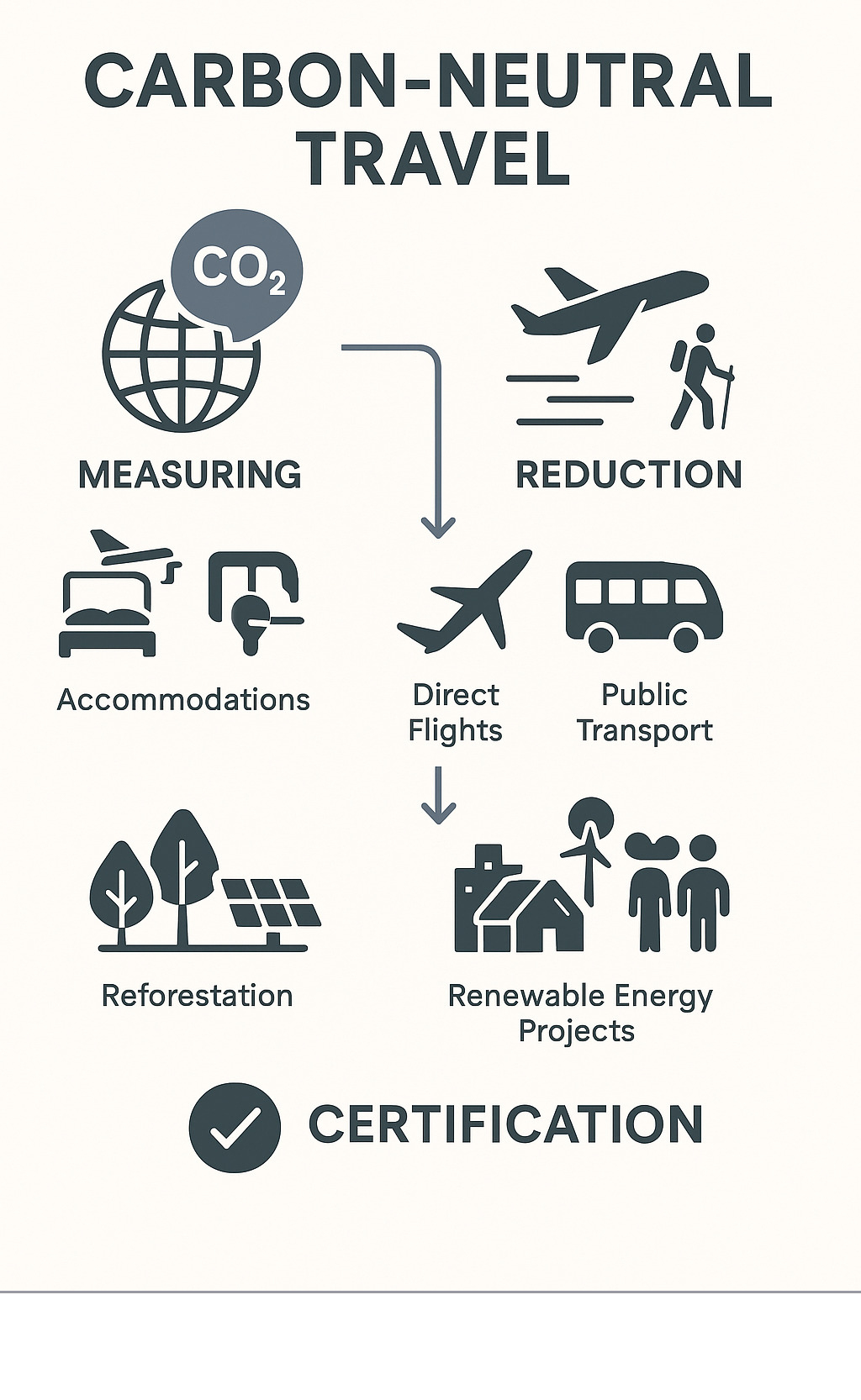
What Does Carbon-Neutral Travel Mean?
Ever wondered what it really means when travel companies claim to be “carbon-neutral”? Let’s break it down in simple terms.
When we talk about carbon-neutral travel companies, we’re referring to businesses that take responsibility for their climate impact by balancing the greenhouse gases they produce with an equivalent amount of emissions reduction or removal. It’s like keeping your environmental books balanced – what you take from the planet, you give back.
Carbon neutrality (also called net-zero carbon emissions) happens when a company removes as much carbon dioxide from the atmosphere as they emit. This is different from simple carbon offsetting, which involves compensating for emissions by funding equivalent carbon savings elsewhere. Some ambitious companies go even further with climate-positive (or carbon-negative) approaches, which means they actually remove more carbon than they produce!
Here’s how these terms differ:
| Term | Definition | Example |
|---|---|---|
| Carbon Neutral | CO₂ removed equals CO₂ emitted | Intrepid Travel has been carbon neutral since 2010 |
| Climate Neutral | All greenhouse gases (not just CO₂) removed equals amount emitted | Companies measuring and offsetting methane and nitrous oxide |
| Carbon Negative / Climate Positive | More CO₂ removed than emitted | Pura Aventura offsets 160% of emissions |
Did you know that travel-related activities account for roughly 10% of worldwide greenhouse gas emissions? These come from many sources – the flights we take, the hotels we stay in, the food we eat, and even the activities we enjoy while exploring new places.
Focus Keyphrase Overview: Carbon-Neutral Travel Companies
Carbon-neutral travel companies don’t just plant a few trees and call it a day. They approach sustainability through a comprehensive strategy that addresses their entire carbon footprint across three key areas:
Scope 1 emissions are the direct emissions from sources they own or control – think company vehicles or office buildings.
Scope 2 emissions cover the indirect emissions from the electricity, steam, heating, and cooling they purchase.
Scope 3 emissions include all other indirect emissions in their value chain – this is usually the biggest category, covering everything from the flights their customers take to the accommodations they book.
A crucial concept in this world is “additionality” – a fancy way of saying that offset projects should create reductions that wouldn’t have happened otherwise. Legitimate carbon-neutral travel companies make sure their investments meet this standard, providing real climate benefits beyond what would have happened anyway.
When done right, carbon-neutral travel isn’t just about guilt-free vacations – it’s about changing how we explore our beautiful planet while preserving it for future generations of triprs.
How Carbon-Neutral Travel Companies Measure & Cut Footprints
Ever wondered what happens behind the scenes when a travel company claims to be carbon neutral? The journey starts with some serious number-crunching. Carbon-neutral travel companies don’t just wave a magic wand—they roll up their sleeves and get down to the nitty-gritty of measuring their climate impact.
The best companies follow a straightforward but powerful three-step approach. First, they avoid emissions whenever possible—like cutting out unnecessary flights for staff meetings. Next, they reduce the emissions they can’t avoid—perhaps by switching to electric vehicles or energy-efficient accommodations. Finally, they offset whatever emissions remain through carefully vetted climate projects.
When it comes to measuring their carbon footprint, these companies don’t guess—they use specialized calculators that track everything from the type of aircraft used for flights to how many miles their tour buses travel. They even account for the energy efficiency of hotels and the environmental impact of the meals they serve. Some even analyze the carbon footprint of specific activities—like that scenic helicopter tour or motorboat excursion.
Many leading travel operators align their goals with the Science Based Targets initiative, ensuring their carbon reduction plans actually match what scientists say we need to limit warming to 1.5°C. It’s like having a compass that keeps them heading in the right direction.
Take Path Net Zero’s platform, for instance—it offers travel companies a way to measure emissions across all modes of transport with impressive accuracy. This isn’t just about feeling good; it’s about knowing your true impact so you can take meaningful action.
The scientific research on climate change makes it clear: half-measures won’t cut it. The tourism industry needs this kind of comprehensive approach to truly make a difference.
Trusted Standards & Verification
Let’s be honest—not all carbon offsets are worth the paper they’re printed on. That’s why reputable carbon-neutral travel companies rely on internationally recognized standards to ensure they’re making a real difference.
The Gold Standard certification, established by WWF and other environmental groups, is considered the gold standard (pun intended!) for a reason. It ensures offset projects deliver genuine environmental benefits while supporting sustainable development. When a company like Atmosfair achieves 90% of its carbon savings according to the CDM Gold Standard, you know they’re not cutting corners.
Other trusted certifications include the Verified Carbon Standard (VCS), the most widely used voluntary greenhouse gas program worldwide, and the Quality Assurance Standard (QAS), which adds another layer of accountability through independent auditing.
What makes these standards trustworthy? They verify that offset projects meet crucial criteria: they wouldn’t happen without carbon finance (additionality), the carbon reductions are permanent, the impact can be measured, independent third parties verify the results, and the carbon credits aren’t counted twice.
The most transparent companies publish detailed annual reports about their emissions and offsetting activities. Some are even using blockchain technology to create tamper-proof verification of carbon credits—think of it as a digital fingerprint that guarantees authenticity.
Common Offset Projects Supported
When carbon-neutral travel companies invest in offset projects, they’re not just ticking boxes—they’re supporting initiatives that often transform communities while helping the planet.
Reforestation and forest conservation projects protect some of Earth’s most precious ecosystems. The Mashpi-Tayra Reserve in Ecuador, for example, safeguards nearly 3,000 hectares of biodiverse rainforest—home to countless species found nowhere else on Earth.
Clean cookstove programs might not sound glamorous, but they make a world of difference. By providing efficient stoves to families in developing countries, these projects can reduce wood consumption by up to 80%. This means less deforestation, fewer emissions, and—importantly—healthier homes free from dangerous indoor air pollution.
Renewable energy projects range from wind farms that power thousands of homes to small solar installations bringing electricity to remote villages for the first time. These initiatives don’t just cut carbon—they often create jobs and energy independence.
Blue carbon projects protect coastal ecosystems like mangroves, which are carbon-sequestering superstars, storing up to five times more carbon per acre than inland forests. Plus, they serve as nurseries for marine life and natural barriers against storms.
Biodiversity corridors create connected pathways for wildlife while capturing carbon. These green highways allow animals to migrate, find mates, and forage—essential activities for healthy ecosystems.
What makes these projects special is how they often address multiple challenges at once. A single well-designed offset project might simultaneously tackle climate change, poverty, gender inequality, and education—aligning with several UN Sustainable Development Goals in one go.
Want to learn more about how you can travel more sustainably? Check out our guide to Eco-Friendly Travel Tips for practical advice you can use on your next trip.
Carbon-Neutral Travel Companies You Should Know

Ready to book your next trip with a clear conscience? Let’s explore some amazing carbon-neutral travel companies that are truly walking the talk when it comes to sustainable tourism. These pioneers aren’t just offsetting emissions—they’re reimagining what responsible travel can look like.
Intrepid Travel – Carbon-Neutral Travel Companies Trailblazer
If there’s a gold standard for sustainable travel, Intrepid Travel has set it. As the world’s largest travel B Corp, they’ve been carbon neutral since 2010—pretty impressive for a company running over 2,000 trips daily across more than 120 countries!
What makes Intrepid special isn’t just their longevity in the carbon-neutral space. They’ve adopted a “carbon neutrality is not enough” philosophy that pushes the boundaries of what’s possible. They’ve become the first global tour operator with science-based targets aligned to a 1.5°C future, and they’ve applied carbon labeling to over 800 trips so you can make informed choices.
I love that they’ve made their carbon labeling guide open-source, essentially saying, “Here’s how we do it—now you can too!” Their support of Indigenous ranger programs beautifully blends traditional knowledge with modern conservation practices, and they’re committed to halving emissions by 2030 while reaching net zero before 2050.
Natural Habitat Trips – Wildlife-Focused Carbon-Neutral Travel Company
For wildlife enthusiasts, Natural Habitat Trips (affectionately known as Nat Hab) offers incredible nature expeditions with a clean conscience. They’ve been offsetting emissions since 2007, with an impressive 68,093 tons of CO2 offset—equivalent to taking 14,672 cars off the road for a year!
What caught my attention about Nat Hab is their forward-thinking approach. Beyond traditional offsetting, they’re investing in negative-emissions technologies like direct air capture and biochar. They’ve partnered with respected organizations like Sustainable Travel International and South Pole for verification, ensuring their claims stand up to scrutiny. They even offer a carbon calculator so you can offset personal travel not booked through them—now that’s commitment!
Pura Aventura – Climate-Positive Small-Group Specialist
Going beyond neutrality, Pura Aventura takes it up a notch by offsetting 160% of the carbon footprint calculated for each client per trip. Yes, you read that right—they’re not just zeroing out emissions but actively helping reduce global carbon levels.
What’s particularly impressive is their custom approach—calculating a specific carbon footprint for each guest rather than using averages. Their investments span renewable energy projects in Sumatra and high-efficiency cookstove distribution in Ethiopia. By focusing on small groups and partnerships with locally owned businesses, they minimize impact while maximizing benefit to communities. It’s travel that leaves places better than we found them.
Rabbie’s Tours – Self-Imposed Carbon Tax Model
I’m a big fan of companies that don’t wait for regulations to do the right thing. Rabbie’s Tours exemplifies this with their self-imposed carbon tax of £10 per tonne, raising £120,000 since 2008 for community and environmental projects.
Their approach is refreshingly practical: small-group tours (maximum 16 people) in fuel-efficient Mercedes mini-coaches, prioritizing public transportation connections, and supporting local businesses. It’s a straightforward formula that works, proving that sustainability doesn’t have to be complicated to be effective.
INTRO Travel – Tree-Planting Powered Youth Trips
If you’re a younger traveler (or young at heart!), INTRO Travel offers a modern take on carbon neutrality that speaks to the digital generation. Since 2019, they’ve planted 10 trees for every booking, resulting in tens of thousands of trees worldwide.
What’s cool about INTRO’s approach is their accept of technology—partnering with Veritree for blockchain-backed verification so you can actually track the impact of your contribution. They focus on fast-growing mangroves in Kenya, which sequester carbon at impressive rates. Using Path Net Zero to measure emissions across all travel modes, they show that eco-friendly travel can be accessible and appealing to younger travelers without breaking the bank.
These pioneering companies prove that amazing travel experiences and environmental responsibility can go hand in hand. Whether you’re looking for wildlife encounters, cultural immersion, or trip travel, there’s a carbon-neutral travel company that aligns with your values.
More info about Sustainable Tourism
How Travelers Can Choose & Support Genuine Carbon-Neutral Trips
Navigating sustainable travel can feel overwhelming, but finding authentic carbon-neutral travel companies is simpler than you might think. As conscious explorers, we have the power to vote with our wallets for a more sustainable future.
Start by looking for trusted certifications that separate genuine commitment from greenwashing. B Corp, Climate Neutral, and offset certifications like Gold Standard aren’t just fancy logos—they represent rigorous standards that companies must meet and maintain. These certifications are your first clue that a company takes sustainability seriously.
Don’t be shy about asking questions! Authentic carbon-neutral travel companies welcome inquiries about their environmental practices. Ask how they calculate their emissions—do they include everything from flights to that welcome cocktail you’ll enjoy? The most responsible companies account for all Scope 3 emissions, which include everything that happens during your journey.
“I was impressed when the tour operator could explain exactly how they calculated the carbon footprint of my Patagonia trek, right down to the local transportation and meals,” shares one eco-conscious traveler.
Transparency matters tremendously. Look beyond the “carbon-neutral” label to understand what offset projects a company supports. Are they investing in verified reforestation efforts? Community-based renewable energy? The best companies will happily share details about their projects and the standards they meet.
Offsetting is just one piece of the puzzle. The most committed carbon-neutral travel companies are actively working to reduce emissions first, then offsetting what can’t be eliminated. Ask about their reduction strategies and timeline—are they aligned with science-based targets that will help limit global warming to 1.5°C?
When comparing options, don’t hesitate to request sustainability reports. Genuine operators will share both their successes and challenges, showing a commitment to improvement rather than perfection.
More info about Green Travel Tips
Personal Actions to Shrink Your Own Travel Footprint
Even when traveling with the greenest companies, our personal choices significantly impact our carbon footprint. Slow travel might be the single most powerful strategy—taking fewer, longer trips rather than multiple short getaways dramatically reduces your flight-related emissions.
When you do fly, opt for direct routes whenever possible. Those extra takeoffs and landings during layovers significantly increase emissions. And while that extra pair of “just in case” shoes might be tempting, packing light reduces fuel consumption—every kilogram matters!
Your zero-waste kit deserves a spot in your luggage. A reusable water bottle, coffee cup, utensils, and shopping bag take up minimal space but make a daily difference in reducing single-use plastics.
Once at your destination, accept local public transportation. Trains, buses, and shared shuttles not only connect you more authentically with a place but also have substantially lower emissions per passenger than private vehicles.
“Knowing my flight’s footprint did influence my booking,” notes a frequent traveler. “I chose to take one longer trip instead of three short ones, which cut my annual travel emissions by more than half.”
Seeking out renewable-powered accommodations further reduces your impact. Many eco-lodges and forward-thinking hotels now operate on solar, wind, or other clean energy sources—and they’re often the most character-filled places to stay!
Your food choices matter too. Eating locally and plant-based reduces both food miles and agricultural emissions, while typically offering a more authentic taste of your destination.
For flights not covered by your tour operator, consider using calculators like South Pole or atmosfair to measure and offset your own emissions. It’s a small additional cost that makes a meaningful difference.
More info about Sustainable Travel Essentials
Future Trends: From Carbon-Neutral to Nature-Positive
The world of sustainable travel is evolving at breakneck speed, with carbon-neutral travel companies now reaching beyond simple neutrality toward truly regenerative approaches. What seemed cutting-edge just a few years ago is rapidly becoming the baseline expectation for conscious travelers.

Remember when simply offsetting your flight felt revolutionary? Today’s innovations are taking sustainability to exciting new heights. Sustainable Aviation Fuel (SAF) represents one of the most promising developments. Made from sustainable resources like waste oils and agricultural residues, SAF can slash flight emissions by up to 80%. Several forward-thinking travel companies are already throwing their weight behind SAF development through strategic partnerships and direct investment.
Meanwhile, Direct Air Capture (DAC) technology is creating waves in the carbon removal space. Unlike traditional offsets that prevent future emissions, DAC actually pulls existing CO2 directly from the atmosphere for permanent storage underground. Tomorrow’s Air, an innovative carbon removal collective, is working with travel industry partners to scale these negative-emissions technologies. Think of it as cleaning up the atmospheric bathtub rather than just turning down the tap!
The concept of Regenerative Travel is perhaps the most transformative trend emerging. This philosophy moves beyond merely “doing less harm” to actively restoring environments and communities. The Regenerative Travel consortium connects curious explorers with hotels and experiences designed to leave destinations better than they found them. Imagine returning from vacation knowing the place you visited is actually healthier because you were there!
On the policy front, the Glasgow Declaration on Climate Action in Tourism has united travel organizations behind five shared commitments: measure, decarbonize, regenerate, collaborate, and finance. Signatories pledge to halve emissions by 2030 and reach net zero before 2050. This kind of industry-wide alignment creates the momentum needed for systemic change.
Technology is playing its part too. Companies like Veritree use blockchain verification to provide transparent, tamper-proof monitoring of offset projects. This technology ensures that when a company claims to have planted 10,000 trees, those trees actually exist and continue to grow—no more taking claims at face value!
The market is clearly driving this evolution. With studies showing that 60% of global consumers now consider sustainability an important criterion when making purchase decisions, travel companies ignoring these trends do so at their peril. The writing is on the wall: carbon neutrality is becoming the minimum standard, while regenerative and nature-positive approaches represent the new gold standard for truly responsible travel.
What does this mean for you as a traveler? The good news is that your options for genuinely sustainable trips will continue to multiply. The better news? The innovations happening today will make tomorrow’s travel experiences not just less harmful, but actively beneficial for our planet.
Scientific research on carbon offsets
Frequently Asked Questions about Carbon-Neutral Travel
How is the carbon footprint of a trip calculated?
Ever wondered what happens behind the scenes when carbon-neutral travel companies crunch the numbers on your vacation’s environmental impact? It’s actually quite fascinating!
When calculating a trip’s carbon footprint, companies look at the complete picture of your journey. They start with transportation—your flights (considering things like aircraft type, distance, and even how full the plane is), cruise emissions, train travel, bus journeys, and car rentals.
Accommodations factor in too—all that energy powering your hotel room’s air conditioning, heating, lights, and hot water gets counted. Even your daily activities matter, from motorized excursions to walking tours. And yes, that delicious local cuisine has a carbon cost too, from how it was grown to how far it traveled to reach your plate.
The most thorough carbon-neutral travel companies add a 15% buffer to their calculations—a little environmental insurance policy to make sure they’re not underestimating your trip’s impact. It’s like rounding up your restaurant tip—but for the planet!
Are carbon offsets just greenwashing?
This is the elephant in the room for many eco-conscious travelers. The honest answer? It depends on how they’re implemented.
Carbon offsets can be powerful tools for climate action when done right. But not all offset programs are created equal. Think of it like coffee—there’s a world of difference between a carefully sourced, ethically produced cup and a mass-produced option that cuts corners.
The best carbon-neutral travel companies follow a clear hierarchy: first, avoid creating emissions where possible; second, reduce what can’t be avoided; and only then, offset what remains. If a company jumps straight to offsetting without trying to minimize emissions first, that’s a red flag.
Look for transparency about which specific projects they support. Are they certified by respected standards like Gold Standard or VCS? Do they create benefits beyond carbon reduction, like supporting local communities or protecting endangered species? Can they prove these projects wouldn’t have happened without their support (what experts call “additionality”)?
When companies meet these criteria, their offsetting represents genuine climate action, not just a green marketing tactic. As one traveler put it, “I want to know my offset dollars are planting real trees, not just easing my conscience.”
What’s the difference between carbon-neutral and climate-positive travel?
Imagine carbon neutrality as balancing your environmental checkbook—you’ve emitted carbon, but you’ve funded projects that remove an equal amount, bringing your net impact to zero. It’s a worthy goal and the foundation of responsible travel.
Climate-positive travel (sometimes called carbon-negative) takes this a step further. It’s like making extra deposits into the Earth’s account—removing more carbon than you emit. Companies like Pura Aventura exemplify this by offsetting 160% of each traveler’s calculated emissions. This approach acknowledges that simply breaking even isn’t enough to address our climate crisis.
Many climate-positive initiatives also take a more holistic view, addressing interconnected environmental challenges. They might support projects that protect biodiversity, restore watersheds, or empower local communities alongside carbon reduction efforts.
Think of carbon-neutral as doing no harm, while climate-positive actively heals. Both represent important steps forward, but as climate awareness grows, more travelers are seeking out companies that aim beyond neutrality toward truly regenerative travel experiences.
More info about Travel Green: Sustainable Tips for Conscious Explorers
Conclusion
The travel landscape is changing, and carbon-neutral travel companies are at the forefront of this change. When we choose to book with operators who genuinely commit to measuring, reducing, and offsetting their carbon footprints, we’re not just taking a trip—we’re making a statement about the kind of world we want to explore and preserve.
Here at Soaring in Style, we’ve finded something remarkable: responsible travel doesn’t diminish your experience—it deepens it. Those magical moments watching wildlife with Natural Habitat Trips, immersing in local cultures with Intrepid Travel, or exploring hidden corners with Pura Aventura become even more meaningful when you know your journey treads lightly on the planet.
The beauty of modern sustainable travel is that luxury and responsibility now walk hand-in-hand. That overwater bungalow feels even more indulgent when powered by solar energy. That gourmet meal tastes better knowing the ingredients came from a local farm. That wildlife encounter becomes more profound when it directly supports conservation.
I remember my first trip with a carbon-neutral travel company—the guide proudly explained how our journey was supporting a mangrove restoration project in Indonesia. Suddenly, my vacation wasn’t just about my enjoyment; it was part of something larger, a tiny contribution to healing our planet.
Every booking with a carbon-neutral travel company represents a vote for the future of travel—one where exploring new horizons doesn’t come at the expense of the very destinations we cherish. As travelers, we hold remarkable power in our wallets and our choices. We can protect the places that move us and support the communities that welcome us with open arms.
The journey toward truly sustainable travel continues to evolve, with new technologies and approaches emerging every year. By staying informed and making conscious choices, we can all be part of this exciting change.
Ready to plan your next trip with a lighter footprint? Dive into our guides to sustainable destinations, responsible wildlife encounters, and practical green travel tips to create memories that last a lifetime while helping ensure these special places remain vibrant for generations to come.
More info about Travel Green: Sustainable Tips for Conscious Explorers