Escaping the Crowds: Europe’s Hidden Treasures
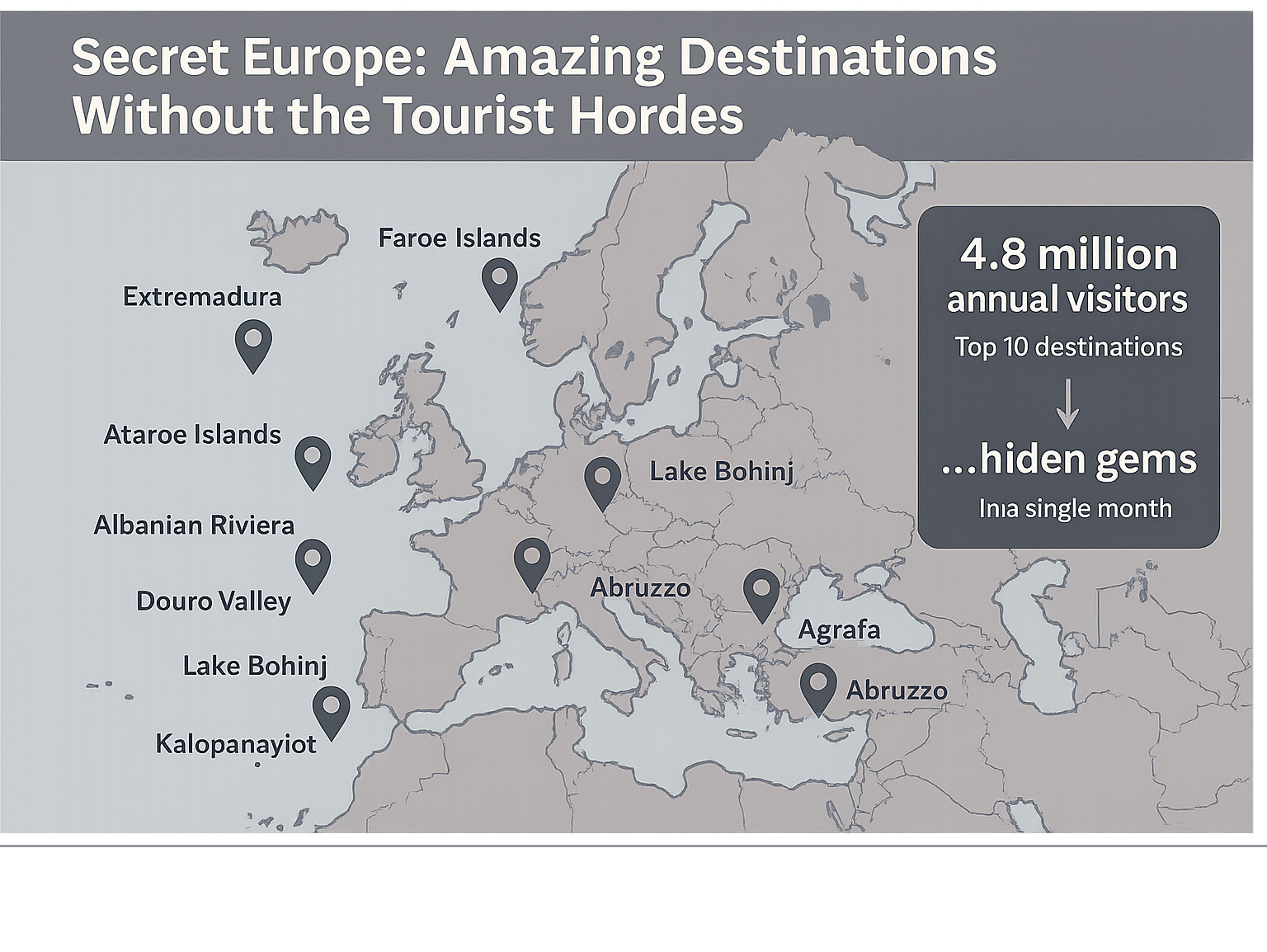
Looking for the best off the beaten path European destinations to escape overtourism? Here are the top hidden gems in Europe for 2025:
- Appenzell, Switzerland – Alpine traditions in pristine meadows
- Extremadura, Spain – Dehesa ecosystems with eagles and Roman ruins
- Faroe Islands – Dramatic cliffs and more sheep than people
- Estonian Islands (Saaremaa, Hiiumaa) – Baltic tranquility and UNESCO biospheres
- Albanian Riviera – Crystal waters without Mediterranean crowds
- Douro Valley, Portugal – Terraced vineyards and authentic quintas
- Lake Bohinj, Slovenia – Bled’s serene, less-visited sister
- Abruzzo, Italy – Mountains meeting coastline with ancient fishing platforms
- Agrafa, Greece – “Unwritten” mountains with off-grid experiences
- Kalopanayiotis, Cyprus – Mountain spa village with Byzantine heritage
While the masses flock to Instagram-famous landmarks, savvy travelers are finding the joy of Europe’s lesser-known treasures. As hashtags like #dupe amass over 342,000 posts on TikTok, it’s clear travelers are seeking alternatives to overcrowded hotspots.
“Exploring the best hidden gems in Europe often means slow-rumbling scenic bus journeys,” notes one seasoned traveler. “Some may call that inconvenient. I call it winning.”
These destinations offer not just solitude, but authentic experiences increasingly rare in Europe’s tourist magnets. In Appenzell, Switzerland—one of the country’s least-visited regions—you’ll find what locals describe as “Switzerland turned up to the max,” with traditional cheesemaking, folk festivals, and mountain panoramas without the crowds of the Bernese Oberland.
The trend toward undertourism isn’t just about avoiding selfie sticks—it’s about finding places where daily life continues uninterrupted by tourism’s machinery. Take Estonia’s western archipelago, so sparsely populated that even in summer, you might have entire beaches to yourself. Or Extremadura, Spain, with one of the country’s lowest population densities at just 25 people per square kilometer.
The rewards? Pristine landscapes, lower prices, meaningful cultural exchanges, and the satisfaction of supporting local economies directly.
Best off the beaten path european destinations vocab to learn:
– best off the beaten path beach vacations
– off the beaten track holidays
What Does “Off the Beaten Path” Mean & Why It Matters
Ever wondered what we really mean when we talk about “off the beaten path” destinations? It’s those charming little towns tucked away from tourist buses. It’s the quiet beaches where locals still outnumber visitors. It’s stumbling upon a village festival that isn’t staged for tourists but is the real deal—authentic celebrations that have continued for generations.
These hidden gems aren’t necessarily remote or difficult to reach. Many are surprisingly accessible—they just haven’t been featured in every travel influencer’s feed… yet. What makes them special is that tourism exists in harmony with local life, rather than overshadowing it.
Here at Soaring in Style, we believe wandering beyond the typical tourist circuits isn’t just refreshing for travelers seeking authentic experiences—it’s actually vital for the health of our favorite places. Venice doesn’t need more day-trippers, but the charming towns of Abruzzo would welcome your visit with open arms and genuine smiles.
More info about Off the Beaten Path
Key Advantages for Travelers
Imagine waking up to the sound of church bells in a village where you’re the only visitor. Picture yourself having a meaningful conversation with a local cheesemaker in Appenzell without twenty other tourists waiting their turn. That’s the magic of choosing the road less traveled.
Solitude and space become your travel companions when you venture beyond hotspots. That perfect sunrise photo at Lake Bohinj? You won’t need to elbow through crowds to capture it. Those mountaintop views in Agrafa? You might share them only with grazing sheep and soaring eagles.
Your wallet will thank you too. Lower prices are almost guaranteed when you step away from tourist centers. That charming family-run guesthouse in the Albanian Riviera might cost half what you’d pay for a cramped room in Santorini, with twice the hospitality.
Perhaps most valuable is the deeper cultural immersion that naturally happens. Without the buffer of tourist menus and English-speaking guides at every turn, you’ll find yourself learning basic phrases, navigating local markets, and having those spontaneous encounters that become your favorite travel stories.
As Mediterranean hotspots face increasing climate challenges, many off-the-beaten-path alternatives offer more moderate temperatures and sustainable tourism practices built from the ground up, not hastily implemented after problems arise.
Key Advantages for Communities & Planet
When you choose lesser-known destinations, your travel becomes a force for good. Your euros, pounds, or dollars flow directly into local economies, often reaching family businesses rather than international chains. That meal at a family taverna in a Troodos Mountain village? Your payment might help send their daughter to university or repair their grandmother’s roof.
By spreading tourism’s footprint more evenly, we help reduce the environmental pressure on beloved but overwhelmed places. Venice’s fragile foundations weren’t designed for 30 million visitors annually, but the villages of Kaszuby in Poland have room to welcome conscious travelers without strain.
Communities not overwhelmed by tourism can maintain their authentic cultural practices more easily. Traditional festivals remain celebrations for locals first, not performances staged for visitors. Historic buildings serve their original purposes rather than all becoming souvenir shops.
Your journey to these places often involves carbon-lighter travel by necessity—more trains, buses, and boats, fewer short-haul flights between major hubs. The vintage train winding through Portugal’s Douro Valley isn’t just atmospheric; it’s part of a more sustainable travel approach.
Research from UNESCO’s World Heritage Center confirms that thoughtfully distributed tourism helps preserve both physical landmarks and living traditions while creating resilient local economies. Scientific research on sustainable tourism shows that when managed with care, tourism can actually strengthen cultural preservation rather than erode it.
The best off the beaten path European destinations don’t just offer amazing experiences for travelers—they represent a more sustainable future for travel itself. One where findy doesn’t mean destruction, and where your presence as a visitor is truly welcome.
The 15 Best Off the Beaten Path European Destinations for 2025
Alpine Escape: Appenzell, Switzerland – “Switzerland turned up to the max”
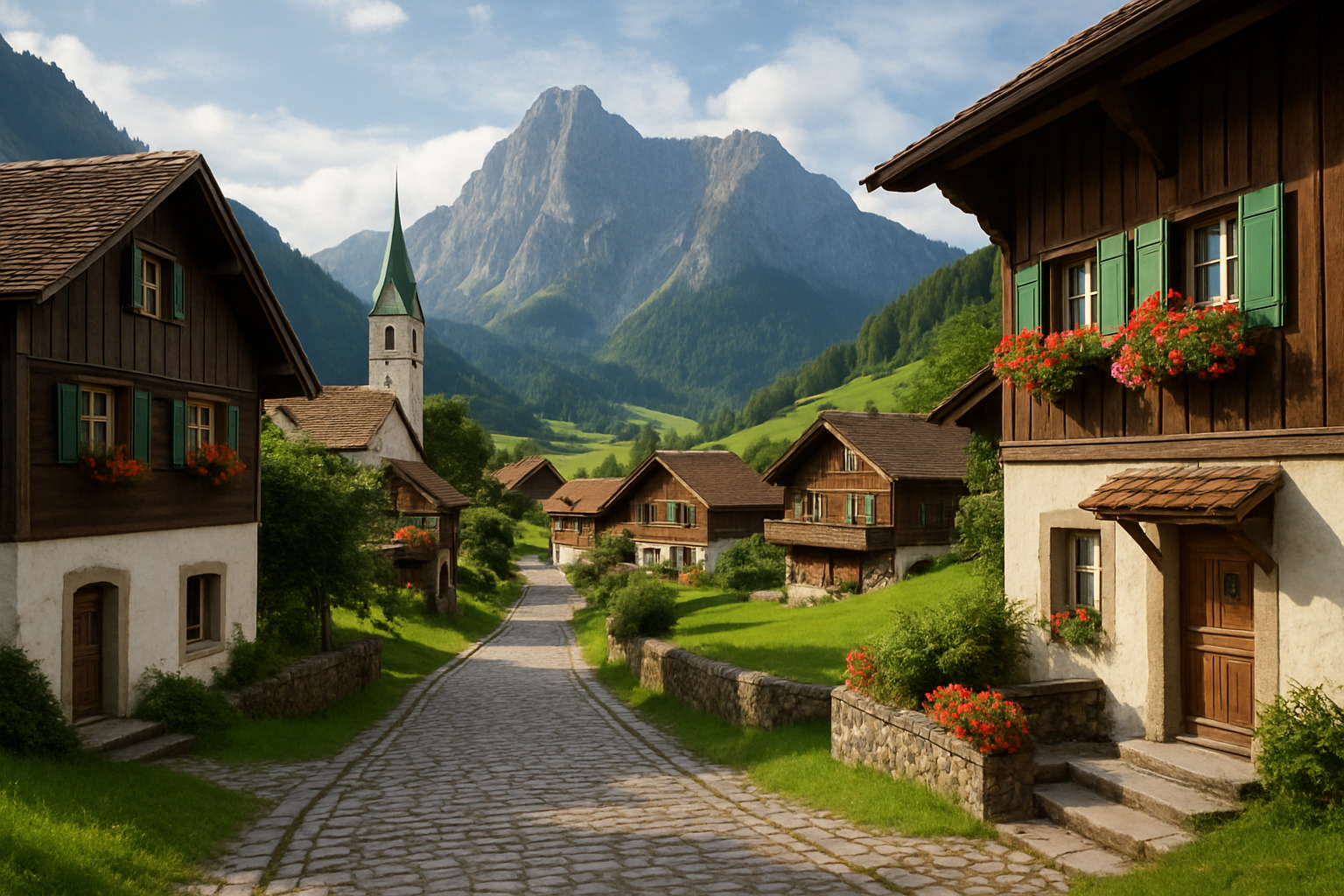
Tucked away in northeastern Switzerland, Appenzell feels like someone dialed Switzerland’s charm to maximum volume. This isn’t a place where Alpine traditions are maintained for tourist cameras – they simply continue as they have for centuries. Despite its breathtaking mountain panoramas and rich cultural heritage, Appenzell remains wonderfully uncrowded, a secret haven for travelers seeking authentic Swiss experiences.
The region’s dairy culture is legendary, with the Appenzeller cheese trail inviting you to witness time-honored cheesemaking methods passed down through generations. As you wander, you’ll find yourself enchanted by colorful wooden farmhouses dotting emerald meadows where brown-and-white cows graze freely, their melodic bells creating nature’s perfect soundtrack to your trip.
For those craving mountain views, the Säntis summit (2,502m) rewards with panoramas spanning six countries on clear days. But what truly sets Appenzell apart is how seamlessly old traditions remain part of modern life – from the Alpabzug (when farmers ceremoniously bring cows down from summer pastures) to open-air democratic assemblies where citizens still vote by raising hands in the town square.
Don’t miss: The folk museums in Appenzell town, the thrilling cable car ride to Ebenalp with its cliff-hugging Aescher restaurant, and if timing allows, the colorful Alpabfahrt festival in late September when flower-crowned cows parade through town.

Wild Spain: Extremadura – Raptors & Roman Ruins Without the Crowds
With just 25 people per square kilometer, Extremadura offers something increasingly rare in Europe – vast open spaces where nature and history coexist in perfect harmony. This forgotten region between Madrid and Portugal represents Spain at its most authentic, where the unique dehesa ecosystem (a magical blend of oak woodland and pasture) nurtures both traditional farming and remarkable wildlife.
Bird enthusiasts will find themselves in heaven here, with five eagle species soaring above the plains and one of Europe’s largest vulture populations. The region’s splendid isolation has preserved both its natural wonders and architectural treasures – from Mérida’s immaculately preserved Roman city to medieval towns like Cáceres and Trujillo that feel frozen in time.
Food lovers, prepare to be delighted! This is the birthplace of Spain’s finest jamón ibérico, produced from black pigs that roam freely among ancient oaks. History buffs can trace Emperor Charles V’s retirement journey along the Ruta de Carlos V to the peaceful Monasterio de Yuste where he spent his final days.
Don’t miss: The birdwatching paradise of Monfragüe National Park, the UNESCO-listed medieval city of Cáceres with its honey-colored stone, and the otherworldly landscape of Los Barruecos with massive granite boulders balancing in seemingly impossible formations.
Nordic Drama: Faroe Islands – More Sheep Than People
Halfway between Iceland and Norway, the Faroe Islands emerge dramatically from the North Atlantic – 18 volcanic islands where sheep outnumber humans and weather transforms landscapes in minutes. Despite their jaw-dropping scenery of vertiginous cliffs, cascading waterfalls, and charming grass-roofed houses, the Faroes remain blissfully uncrowded even during peak summer months.
Hikers will find paradise here, with well-marked trails (often indicated by ancient stone cairns) leading to viewpoints that seem suspended between sea and sky. Tórshavn may be one of the world’s tiniest capitals with just 13,000 residents, but it punches well above its weight with excellent restaurants, cozy wool shops, and vibrant music venues celebrating Faroese culture.
What makes the Faroes truly special is their perfect blend of Nordic efficiency and untamed wilderness. Modern tunnels and bridges connect most islands for easy exploration, yet you’re never more than a short walk from experiences that feel like genuine findies in untouched nature.
Don’t miss: The bird cliffs of Vestmanna (where thousands of puffins, guillemots and kittiwakes nest), the mind-bending optical illusion of Lake Sørvágsvatn appearing to hover above the ocean, and the historic village of Kirkjubøur with its medieval ruins and 900-year-old farmhouse.
Baltic Bliss: Saaremaa & Hiiumaa, Estonia – Islands of Quiet Pines
Estonia’s western archipelago – including Saaremaa, Hiiumaa, Muhu, Kihnu, and Vormsi – offers a Baltic experience unlike any other, where time seems to slow among windmills, lighthouses, and fragrant juniper groves. So sparsely populated that even in summer, you might have entire beaches to yourself, these islands preserve a way of life deeply connected to sea rhythms and changing seasons.
Saaremaa, the largest island, welcomes visitors with a remarkable meteorite crater field, medieval churches with distinctive dolomite architecture, and the imposing Kuressaare Castle. The flat terrain and light traffic make these islands perfect for cycling trips, with well-marked routes connecting cultural sites and natural wonders. UNESCO has recognized the area as a biosphere reserve for its unique coastal ecosystems and sustainable human presence.
What truly distinguishes these islands is their fascinating cultural heritage – from the matriarchal society of tiny Kihnu Island (where women still wear vibrant striped skirts daily) to the Swedish-influenced communities of Vormsi with their distinctive circular cemetery.
Don’t miss: The medieval Kuressaare Episcopal Castle with its excellent museum, the mysterious Kaali meteorite crater (formed 7,500 years ago and featured in local mythology), and the photogenic wooden windmills of Angla Heritage Culture Center where traditional crafts continue.
Secret Riviera: Albanian Coast – Ksamil to Llogara Pass Road Trip
The Albanian Riviera remains Europe’s last true Mediterranean secret – a breathtaking coastline with waters so crystal-clear they rival Greece or Italy, but at a fraction of the cost and without the crowds. From the white-sand beaches of Ksamil near the Greek border to the dramatic Llogara Pass where mountains plunge into the sea, every turn reveals another postcard-perfect vista.
Albania is experiencing its tourism awakening, with visitor numbers increasing 30% in recent years, yet they remain far below neighboring countries. This sweet spot means you’ll find good infrastructure developing rapidly while still enjoying uncrowded beaches and genuine connections with locals happy to share their culture.
A road trip from Saranda to Vlora takes you through Ottoman-era villages like Dhërmi and Himara perched on hillsides, past secluded coves accessible only by boat or adventurous footpaths, and up the serpentine Llogara Pass with its heart-stopping views. Along the way, you’ll find a cuisine that beautifully blends Mediterranean and Balkan influences – fresh seafood, local olive oil, and surprisingly excellent wines that rarely make it beyond Albanian borders.
Don’t miss: The mesmerizing Blue Eye spring with its hypnotic deep blue waters, the ancient ruins of Butrint (a UNESCO site spanning Greek, Roman, Byzantine and Venetian history), and the seafood restaurants of Ksamil where you can dine with your feet in the sand and views of Corfu across the water.
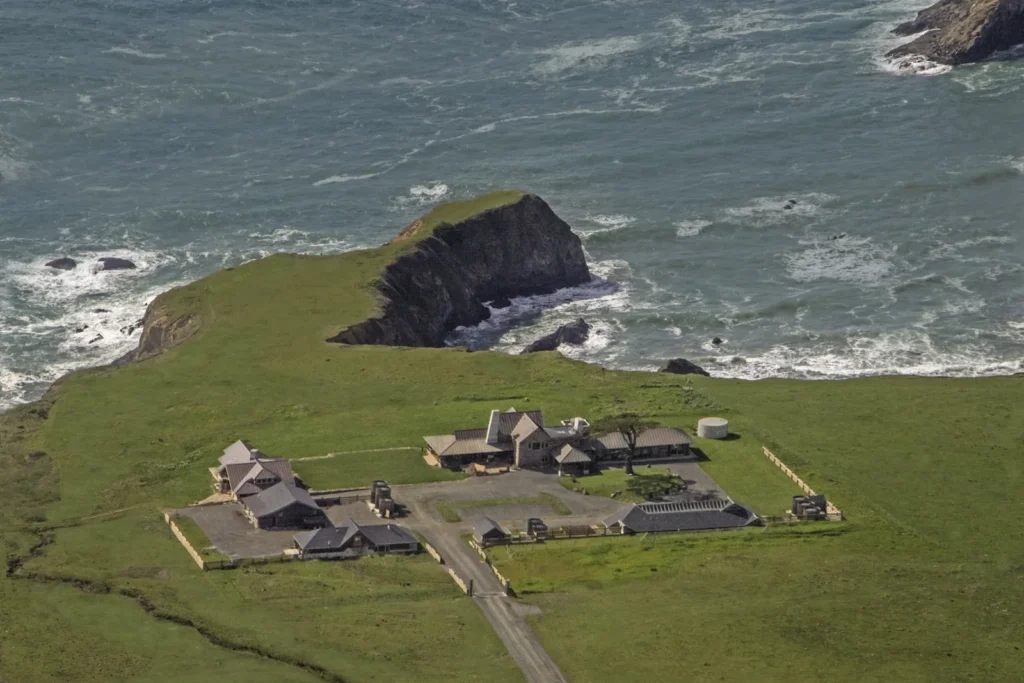
Green Portugal: Douro Valley – Wine, Rails & River Curves
While Portugal’s cities and beaches have seen tourism surge, the Douro Valley—despite being the world’s oldest demarcated wine region—remains surprisingly uncrowded. This UNESCO-protected landscape of terraced vineyards dramatically carved into steep riverbanks offers some of Europe’s most spectacular scenery and finest wines without the masses found in more famous wine destinations.
The Douro invites exploration in multiple ways: by car along winding roads that hug the hillsides, by historic train on the Linha do Douro railway that snakes alongside the river, or most romantically, by boat on the river itself. What makes this region truly special is the harmonious relationship between human creativity and natural landscape – the hand-built stone terraces dating back centuries create an architectural marvel that happens to produce world-class wines.
Beyond wine, the Douro charms visitors with historic towns like Pinhão and Peso da Régua, scenic hiking trails threading through vineyards, and quintas (wine estates) where you can stay overnight among the vines and dine with the families who’ve tended them for generations. The hearty regional cuisine features dishes like roast kid goat and bacalhau (salt cod) prepared in countless ways – perfect companions to the robust local wines.
Don’t miss: A visit to a family-run quinta for intimate wine tasting experiences, a ride on the historic Douro line train for spectacular river views, and a boat trip through the valley’s most dramatic section where vineyards climb impossibly steep slopes.
More info about Best Europe Travel Route
Slavic Serenity: Lake Bohinj, Slovenia – Bled’s Untouched Sister
Just a short journey from Instagram-famous Lake Bled lies Lake Bohinj – larger, wilder, and far less visited, nestled within Triglav National Park. While tourists jostle for that perfect shot of Bled’s island church, Bohinj offers equally stunning mountain-framed beauty but with room to breathe and a more authentic connection to Slovenia’s alpine soul.
The crystal-clear waters invite summer swimming, kayaking, and stand-up paddleboarding against a backdrop of soaring peaks. The surrounding Julian Alps provide endless hiking opportunities from gentle lakeside strolls to challenging summit climbs. Come winter, the nearby Vogel Ski Resort offers 22 km of slopes and spectacular panoramas without the prices or crowds of more famous Alpine destinations.
What truly sets Bohinj apart is its commitment to thoughtful, sustainable tourism. The area has deliberately chosen quality over quantity, preserving both its natural splendor and local culture. Sitting within Slovenia’s only national park ensures protection of its pristine waters and ancient forests where bears and lynx still roam.
Don’t miss: The cable car to Vogel for jaw-dropping views across the Julian Alps, the thundering Savica Waterfall that inspired Slovenia’s greatest poet, and the alpine meadows of Pokljuka Plateau with their traditional wooden herdsmen’s huts that come alive during summer grazing season.
Book-Town & Glacier: Fjærland, Norway – 4 km of Second-Hand Books
In western Norway, where fjords cut deep into mountains like nature’s own sculpture, lies the tiny village of Fjærland – home to just 300 souls but nearly 4 kilometers of second-hand books. Known as “The Norwegian Book Town,” this literary haven houses thousands of volumes across 12 different venues, from converted ferry waiting rooms to the former post office and local bank.
Yet Fjærland offers more than literary treasures. Sitting at the foot of Europe’s largest mainland glacier, Jostedalsbreen, it combines cultural charm with dramatic natural beauty. The award-winning Norwegian Glacier Museum provides fascinating insights into these massive ice formations, while guided glacier hikes offer close encounters with the blue ice that has shaped this landscape for millennia.
What makes Fjærland truly magical is its perfect balance of culture and wilderness, with the added bonus of being accessible by ferry through the spectacular Sognefjord – Norway’s longest and deepest fjord. In summer, you can even experience a floating sauna on the fjord, alternating between warming steam and refreshing plunges into the pristine waters.
Don’t miss: Gliding across the fjord in a kayak with glacier views, browsing the eclectic bookshops where literary treasures await findy, and hiking to the glacier tongue at Bøyabreen where you can witness the power of ice up close.
Mediterranean Alps: Abruzzo, Italy – Campo Imperatore & Trabocchi Coast
Often called “the greenest region in Europe,” Abruzzo offers everything travelers love about Italy—historic towns, exceptional food, beautiful coastline—without the crowds overwhelming Tuscany or the Amalfi Coast. This central Italian region stretches from the azure Adriatic Sea to the soaring Apennine Mountains, creating a remarkable diversity of experiences within a compact area.
In the mountains, the Gran Sasso massif rises dramatically to nearly 3,000 meters, with the vast alpine plateau of Campo Imperatore (affectionately nicknamed “Little Tibet”) offering spectacular hiking in summer and skiing in winter. Along the coast, the unique trabocchi—ancient wooden fishing platforms now transformed into extraordinary restaurants—provide unforgettable dining experiences directly over the sparkling sea.
What makes Abruzzo truly special is how it preserves traditional Italian life. The concept of albergo diffuso (scattered hotel) was pioneered here, with abandoned homes in medieval villages like Santo Stefano di Sessanio thoughtfully transformed into atmospheric accommodations that help revitalize historic communities while offering visitors an authentic immersion in Italian village life.
Don’t miss: The wild, open beauty of Campo Imperatore (where many spaghetti westerns were filmed), dining on a trabocco along the Costa dei Trabocchi with the day’s catch prepared simply and perfectly, and exploring the perfectly preserved medieval town of Scanno with its distinctive architecture and traditional jewelry crafts.
Eastern Alps: Agrafa, Greece – “Unwritten” Mountains
When most visitors picture Greece, they imagine whitewashed islands and ancient ruins—not remote mountain wilderness. Yet in central Greece lie the Agrafa mountains, whose very name means “unwritten,” referring to their historical absence from Ottoman tax registers due to their inaccessibility. Today, this splendid isolation preserves one of Europe’s most authentic mountain cultures and landscapes.
The region unfolds in dramatic scenery of dense pine forests, stone-built villages clinging to hillsides, and clear rivers rushing through deep gorges. Hiking trails range from gentle walks connecting traditional villages to challenging mountain ascents that reward with panoramic views. Montanema Handmade Village offers a unique base—thoughtfully designed stone lodgings built for sustainability and comfort in this off-grid environment.
What gives Agrafa its special character is the seamless blend of wilderness and living traditions. Local guides share their knowledge through mushroom foraging expeditions, cooking classes featuring regional specialties like wild boar stew, and stories of the area’s rich folklore and resistance history. Lake Plastira provides a stunning blue counterpoint to the green mountains, with activities from kayaking to horseback riding along its shores.
Don’t miss: A jeep excursion on unpaved mountain roads to remote monasteries tucked into seemingly inaccessible locations, a visit to the remarkable Panagia Pelekiti Monastery built into a sheer cliff face, and sampling local mountain tea and pine honey from bees that feed on the region’s wild herbs and flowers.
Forest & Spa: Troodos & Kalopanayiotis, Cyprus – Monasteries Above the Sea
Cyprus conjures images of beaches and ancient ruins, but few visitors venture into the Troodos Mountains forming the island’s backbone. Here, among fragrant pine forests and terraced vineyards, you’ll find Byzantine monasteries with magnificent frescoes, traditional villages of honey-colored stone, and a surprising winter attraction—skiing on Mount Olympus at 1,900 meters above the Mediterranean.
The village of Kalopanayiotis has undergone a remarkable change through thoughtful development into a wellness destination centered around its natural sulphur springs. The visionary Casale Panayiotis project has breathed new life into this once-dwindling village by converting traditional houses into comfortable accommodations while carefully preserving architectural heritage and local traditions.
What makes this mountainous region truly special is its seamless blend of cultural treasures and natural beauty. The painted churches of Troodos are UNESCO World Heritage sites, housing Byzantine and post-Byzantine frescoes of extraordinary artistic quality and historical significance. The mountain climate offers welcome relief from coastal heat in summer and a complete change of scenery in winter, with snow-covered forests just an hour’s drive from palm-lined beaches.
Don’t miss: The awe-inspiring Kykkos Monastery with its silver-covered icon of the Virgin Mary, the refreshing Caledonia Waterfall trail through pine and plane trees, and a therapeutic soak in Kalopanayiotis’s sulphur springs that have been revered for their healing properties since Roman times.

Hidden England: New Forest, UK – Pony-Grazed Glades & Cottage-Core Pubs
Just 90 minutes from London’s hustle lies the New Forest National Park—a medieval royal hunting ground where wild ponies, cattle, and pigs still roam freely under ancient commoning rights. This enchanting landscape of open heathland and ancient woodland offers a quintessentially English countryside experience without the tourist crowds of the Cotswolds or Lake District.
The forest’s unique charm comes from its blend of natural beauty and centuries of gentle human influence. Thatched villages like Brockenhurst and Beaulieu seem plucked straight from a storybook, while historic pubs with crackling fires serve local ales and game dishes. The famous free-roaming ponies—an iconic symbol of the forest—create magical moments as they wander through villages and woodland glades with their foals in spring.
What makes the New Forest truly special is how it combines easy accessibility with authentic rural character. Well-marked cycling and walking trails make exploration a delight for all abilities, while the absence of fences or boundaries creates a rare sense of openness and freedom unusual in southern England. Ancient oaks that once provided timber for the royal navy now shelter deer, badgers and a rich diversity of bird life.
Don’t miss: Cycling the disused railway path from Brockenhurst to Burley (stopping at country pubs along the way), spotting majestic deer in the Bolderwood Deer Sanctuary, and visiting the fascinating shipbuilding village of Buckler’s Hard on the peaceful Beaulieu River where vessels for Nelson’s fleet were constructed.
Polish Lake District: Kaszuby – 700 Lakes & Kashubian Culture
Poland’s Kaszuby (Kashubia) region northwest of Gdańsk unfolds as a landscape of nearly 700 lakes and over 50 nature reserves, making it one of the most naturally rich yet least-visited regions in the country. This is Poland’s answer to the lake districts of Finland or northern Italy—a place where pristine waters mirror forests of pine and birch, and where a distinct regional culture adds fascinating depth to natural beauty.
The Kashubian people proudly maintain their own language (officially recognized as Poland’s only regional language), vibrant folk art traditions, and distinctive cuisine. The region is celebrated for its colorful embroidery featuring floral motifs, ceramic whistles shaped like birds and animals, and intricate paper cutouts decorating homes. Lakes like Wdzydze and Radunia offer excellent kayaking, sailing, and swimming, while the Hel Peninsula stretches into the Baltic Sea with its pristine beaches and charming fishing villages.
What gives Kaszuby its special character is the thoughtful preservation of both natural environments and living cultural heritage. The aptly named Kashubian Switzerland Landscape Park protects the region’s most dramatic terrain of hills and lakes, while folk traditions continue to thrive in villages throughout the area, celebrated through festivals, music, and crafts.
Don’t miss: The fascinating Kashubian Museum in Kartuzy showcasing regional culture, kayaking the scenic Radunia River as it connects a string of lakes, and sampling regional specialties like ruchanki (potato pancakes with apple) and truskawka kaszubska (Kashubian strawberries with a distinctive sweet-tart flavor grown nowhere else).
Getting There & Getting Around: Practical Access Tips
Contrary to what many travelers believe, Europe’s hidden gems aren’t necessarily hard to reach. While they may require a bit more planning than major tourist hubs, most of these best off the beaten path European destinations are surprisingly accessible with the right approach.
The European rail network offers exceptional value for explorers seeking authentic experiences. An Interrail or Eurail pass can take you far beyond major cities, connecting to charming regional lines that serve smaller towns and villages. In Switzerland, the comprehensive Swiss Travel Pass covers not just main routes but also mountain railways that wind their way to remote alpine communities like Appenzell, where traditional cheese-making and folk customs continue uninterrupted.
“Taking the train through Europe’s lesser-known regions isn’t just transportation—it’s part of the experience,” notes a frequent Soaring in Style traveler. “The regional lines often offer the most spectacular views and a chance to observe local life unfolding.”
Budget airlines have revolutionized access to secondary destinations, with affordable flights now serving airports near many of our recommended spots. Airports like Kutaisi (Georgia), Tuzla (Bosnia), and Podgorica (Montenegro) provide budget-friendly gateways to regions most travelers overlook. From these entry points, local transportation networks can usually get you where you need to go.
For maximum flexibility, especially in regions with limited public transport, renting a car opens up possibilities that organized tours simply can’t match. The winding roads of Extremadura, the dramatic coastal highway of Albania, or the ancient forest tracks of England’s New Forest are best explored at your own pace. Consider one-way rentals to create linear journeys rather than circular routes, allowing you to cover more ground without retracing your steps.
Island destinations often offer the most memorable arrivals. The gentle sway of a ferry approaching Estonia’s western archipelago or the dramatic sea crossing to the Faroe Islands becomes part of your travel story, not merely transportation. These maritime connections typically run year-round, though with reduced frequency in winter months.
Timing your visit is crucial for the perfect balance of good weather, reasonable prices, and fewer tourists. The sweet spot for most European destinations falls in the shoulder seasons—May to June and September to October—when you’ll enjoy pleasant temperatures and seasonal festivals without high-season crowds or prices.
Timing & Weather Cheatsheet
Late spring (May-June) brings wildflowers carpeting mountain meadows, pleasant temperatures, and pre-summer tranquility. This period is ideal for Alpine destinations like Appenzell, the rolling hills of Abruzzo, and the bird-rich Estonian Islands where migratory species return.
Early autumn (September-October) transforms many regions with harvest celebrations. The Douro Valley comes alive with wine festivals, Abruzzo’s hillsides turn golden, and forests in Poland’s Kaszuby and England’s New Forest display spectacular foliage. Plus, the Mediterranean is still warm enough for swimming along Albania’s coast.
Winter offers surprising opportunities in unexpected places. Who would imagine skiing on Mount Olympus in Cyprus, just a short drive from Mediterranean beaches? Or enjoying uncrowded slopes in Slovenia’s Lake Bohinj region for a fraction of what you’d pay in famous Alpine resorts?
For northern destinations like the Faroe Islands and Estonia’s western archipelago, the midnight sun season (June-July) provides extended daylight hours—sometimes nearly 24—allowing for long days of exploration and photography in magical light.
Safety, Language & Connectivity
One advantage of venturing beyond tourist hotspots is that these areas typically have lower crime rates than major cities. Still, practical preparations will improve your experience:
Local SIM cards provide better coverage in remote areas and are surprisingly affordable across Europe. Many countries offer tourist-specific packages with generous data allowances—essential for navigation and translation apps when you’re off the beaten path.
For seamless connectivity, eSIM options like Airalo let you activate digital SIMs before departure, ensuring you’re connected the moment you land. This can be particularly valuable in remote regions where finding a physical SIM vendor might be challenging.
Learning a few basic phrases in the local language goes remarkably far in regions unaccustomed to international visitors. While English proficiency varies widely across Europe, a simple “thank you” or “good morning” in the local tongue can transform interactions. Apps like Duolingo or Memrise make pre-trip language preparation easy and engaging.
While most European destinations have good healthcare facilities, it’s wise to pack a comprehensive first aid kit when exploring remote areas. Ensure your travel insurance covers medical evacuation from isolated regions—a small precaution that provides significant peace of mind as you venture into Europe’s most authentic corners.
More info about Best Europe Travel Route
Travel Responsibly: Eco-Friendly Choices for Hidden Europe
When you venture beyond the tourist trails, you step into communities and ecosystems that often remain pristine precisely because they haven’t experienced mass tourism. At Soaring in Style, we believe this privilege comes with responsibility. The good news? Making eco-friendly choices improves rather than diminishes your experience of these special places.
Think about the joy of finding a family-run restaurant where the chef proudly explains how everything on your plate was grown within 10 miles. This isn’t just marketing—it’s the reality of slow food in many rural European regions, where farm-to-table isn’t a trend but a centuries-old tradition. In places like Abruzzo or the Douro Valley, eating locally means experiencing the most authentic flavors of the region while supporting sustainable agriculture.
Water management becomes particularly important in remote areas. I’ve found carrying a reusable bottle not only reduces plastic waste but connects you to local life through public refill stations. In alpine regions like Appenzell, centuries-old stone fountains provide crystal-clear mountain water—a refreshing drink with zero environmental impact and a moment of connection with local traditions.
While renting a car offers flexibility in remote regions, consider mixing your transportation. Some of my most memorable travel moments have come from chatting with locals on regional public transport routes that tourists rarely use. The narrow-gauge railway through the Douro Valley or the island-hopping ferries of Estonia offer both spectacular views and significantly lower carbon footprints than driving everywhere.
When hiking through pristine landscapes like the Agrafa mountains or Albanian coastline, embracing leave no trace principles protects the very beauty you’ve come to experience. I’ve made it a habit to carry a small bag for collecting any litter I find on trails—a tiny effort that helps preserve these special places for future travelers and local communities alike.
Perhaps most importantly, seek out community-led tourism initiatives where local people have agency in how tourism develops. In Kalopanayiotis, Cyprus, the village’s revitalization came through local ownership of accommodations and experiences, ensuring tourism benefits are widely shared rather than extracted by outside investors.
More info about Eco-Travel Destinations
How Visiting Hidden Gems Supports Sustainable Tourism
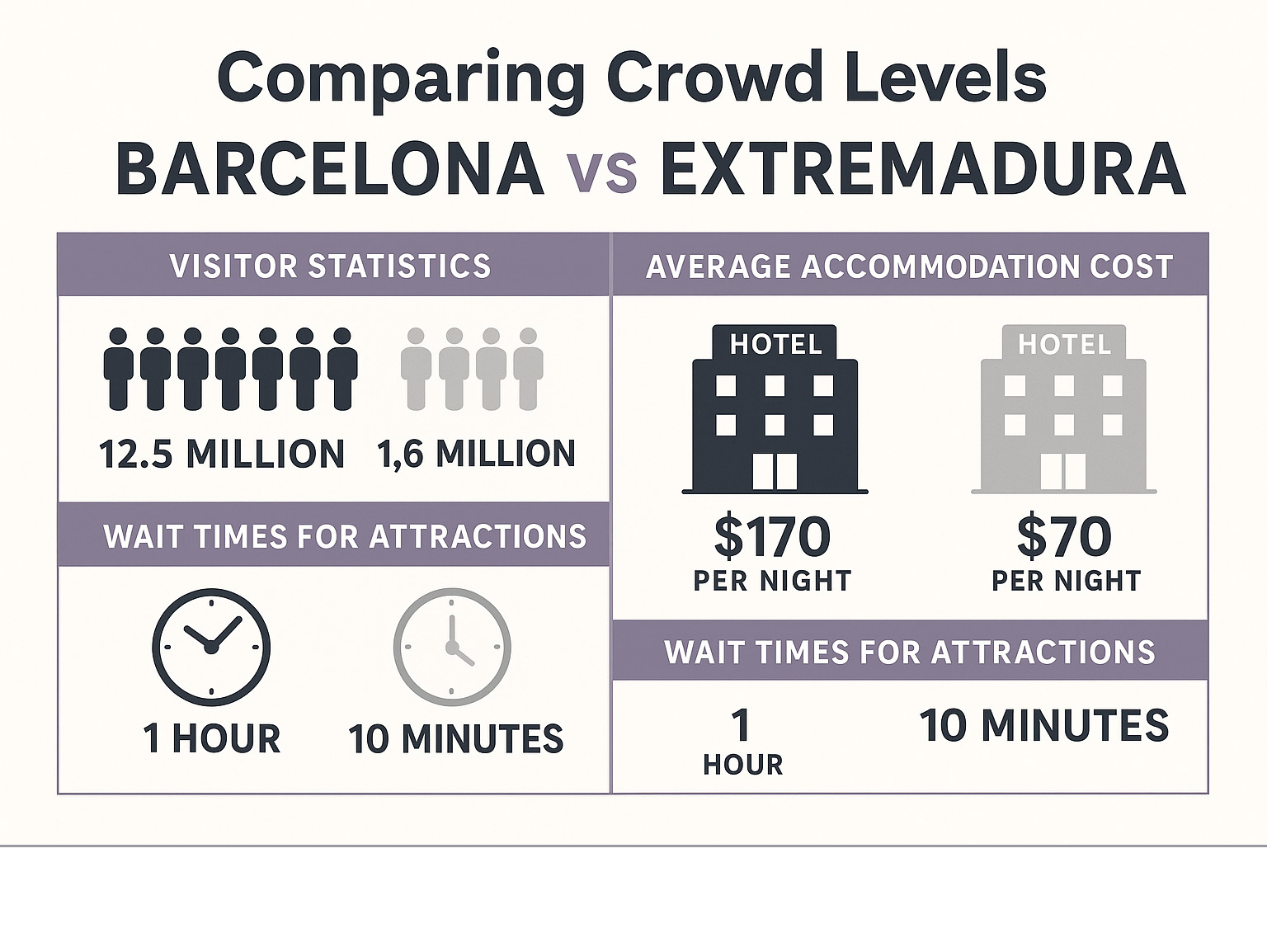
Your choice to explore best off the beaten path European destinations is itself a meaningful contribution to sustainable tourism. When you spend time in Extremadura instead of Barcelona or Lake Bohinj instead of Lake Bled, you’re helping relieve pressure on destinations struggling with overtourism while bringing economic benefits to regions that need it more.
Tourism dollars in rural and developing regions create proportionally larger positive impacts. In the Estonian Islands or Albania’s coastal villages, your accommodation spending often goes directly to family businesses rather than international hotel chains. I’ve watched the pride on a guesthouse owner’s face in Saaremaa as she explained how tourism has allowed her family to restore their historic farmhouse while remaining in their ancestral community instead of migrating to cities.
Cultural traditions thrive with the right kind of tourism. In Kaszuby, Poland, traditional embroidery and ceramics find new markets through respectful visitors, creating economic incentives for younger generations to maintain these crafts. Unlike mass tourism that can lead to performances staged solely for visitors, moderate tourism often strengthens authentic cultural expressions.
Environmental protection becomes economically viable when natural beauty attracts responsible tourism. Communities in the Faroe Islands have increasingly opposed environmentally damaging industries as they’ve recognized their pristine landscapes as valuable assets that sustainable tourism can help preserve for generations.
Finally, historic preservation receives vital funding through tourism. In regions like Agrafa or Abruzzo, the restoration of ancient buildings often depends on their potential to attract visitors. By staying in an albergo diffuso in a medieval Italian village, you’re directly contributing to the preservation of architectural heritage that might otherwise crumble into history.
Your travel choices matter. By venturing beyond the obvious destinations and making thoughtful decisions along the way, you become part of the solution rather than adding to tourism’s challenges.
Frequently Asked Questions about the Best Off the Beaten Path European Destinations
Is off-the-beaten-path Europe suitable for families or solo travelers?
Absolutely! Families often find these hidden corners of Europe more rewarding than crowded hotspots. The natural playgrounds of places like the New Forest with its wandering ponies or Lake Bohinj with its crystal-clear swimming spots create unforgettable childhood memories. Children tend to thrive in these spaces where they can explore freely without the sensory overload of tourist centers.
“My kids still talk about the wild ponies that walked right up to our picnic in the New Forest,” one family traveler told us. “They learned more about nature in that week than in a year of science classes.”
For solo travelers, these lesser-known destinations often provide something unexpected – easier connections with locals. When visitors are still relatively uncommon, locals tend to be genuinely curious rather than fatigued by tourism. A solo traveler in Estonia’s islands might find themselves invited to a sauna evening, while in the Douro Valley, a vineyard owner might offer an impromptu extended tasting simply for the pleasure of sharing their passion.
The safety factor is worth mentioning too – many of these regions have remarkably low crime rates, often lower than famous tourist destinations where pickpocketing and scams can be common.
How can I combine famous landmarks with hidden gems in one itinerary?
Finding that perfect balance between bucket-list sights and authentic findies is the holy grail of thoughtful travel. I’ve found two approaches work particularly well:
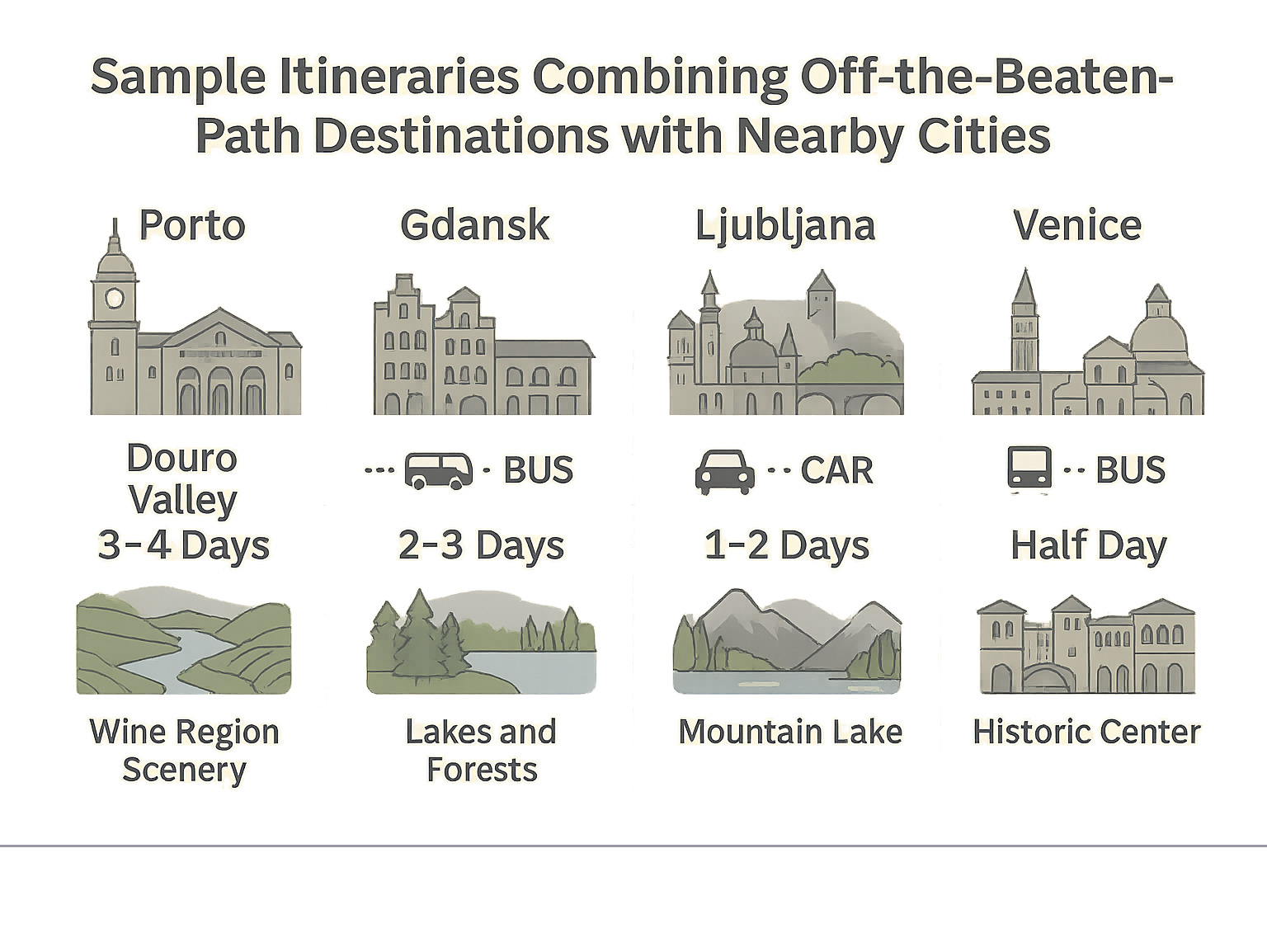
The first is what I call the “hub and spoke” method. Choose a less-visited second-tier city as your base – Porto for exploring the Douro Valley, Gdańsk before venturing into Kaszuby, or Ljubljana as your gateway to Lake Bohinj. Spend your first days enjoying your base city’s attractions, then use its transport connections for day trips or overnight excursions to nearby hidden gems.
Alternatively, try the “sandwich approach” – bookending your trip with famous destinations while filling the middle with off-the-beaten-path experiences. Start with a few days in Barcelona, then head to Extremadura’s dehesa landscapes before finishing in Madrid. This satisfies that desire to see iconic landmarks while providing refreshing contrasts and deeper cultural insights in between.
“The contrast made both parts of our trip better,” shared one Soaring in Style reader. “After the quiet of Abruzzo’s mountains, Rome’s energy felt exciting rather than overwhelming.”
Are English speakers widely understood in remote regions?
The English language landscape varies dramatically across Europe’s hidden corners. In Nordic destinations like the Faroe Islands, you’ll rarely encounter language barriers – English proficiency approaches 90% even in remote fishing villages. Southern and Eastern European gems present more of a mixed picture.
You’ll generally find English speakers in accommodation, restaurants, and tourism services even in remote areas, but everyday interactions in local shops or with older residents might require some creative communication. This linguistic trip is part of the charm of venturing beyond the tourist trail.
I’ve found that learning just a handful of phrases makes a world of difference – not just practically but in the warmth of reception. A simple “Dobrý deň” in Slovakia or “Faleminderit” in Albania opens doors and hearts in ways that expecting English cannot.
Young Europeans everywhere tend to have at least basic English skills, so when in doubt, looking for someone under 30 might help bridge communication gaps. And technology has transformed this aspect of travel – offline translation apps work wonders in areas with spotty connectivity. I’ve had delightful conversations with elderly cheesemakers in Appenzell using nothing but Google Translate and enthusiastic gestures.
The language “barriers” in these regions often lead to the most memorable and genuine exchanges – proving that human connection transcends perfect verbal communication.
Conclusion
As we look toward the future of European travel, the road less traveled offers not just an escape from crowds but a more meaningful, sustainable way to experience the continent’s incredible diversity. The best off the beaten path European destinations we’ve highlighted represent a different kind of luxury—the luxury of space, authenticity, and findy.
Think about waking up to the sound of cowbells on the cheese trails of Appenzell, or losing yourself among the book-filled barns of Fjærland. Imagine watching eagles soar above the ancient dehesas of Extremadura or standing in silent awe before Byzantine treasures tucked into Cyprus’s mountains. These experiences remind us that Europe’s magic extends far beyond its famous capitals and Instagram-famous coastlines.
By choosing these hidden corners, you’re not just enhancing your own travel experience—you’re participating in a more balanced form of tourism that preserves what makes each place special. Your presence supports communities that maintain traditions not as tourist attractions but as living heritage. And often, you’ll find that the most memorable travel moments happen precisely when you put away the checklist and follow that winding road just to see where it leads.
At Soaring in Style, we believe travel should be a two-way exchange that enriches rather than extracts—leaving both traveler and place better for having encountered one another. These quieter corners of Europe offer exactly that opportunity: conscious exploration that soars with elegance while touching down lightly on the places we visit.